

Political Pressure Builds as Markets Begin to Price In a Deal
President Donald Trump’s declining approval ratings and a fresh surge in inflation are increasingly pointing toward a diplomatic off-ramp with Iran – and some asset prices are already moving ahead of any formal announcement.

Why Trump May Be Running Out of Room
The combination of weakening domestic support and rising consumer prices creates a political environment where a prolonged confrontation with Iran carries real economic costs that feed directly back onto American households. Inflation eats into wages, dampens consumer confidence, and – historically – damages the standing of incumbent administrations. For Trump, whose approval numbers have slid, the calculus for a negotiated resolution may be shifting from optional to necessary.
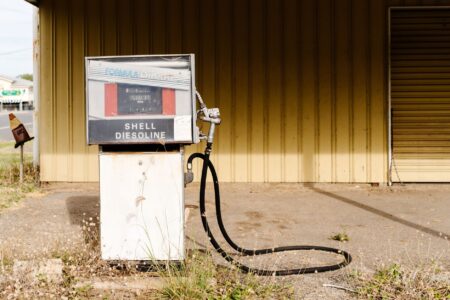
Energy prices sit at the center of that calculus. Iran is a significant oil producer, and any easing of sanctions or normalization of relations would put additional supply into global markets. More barrels generally mean lower crude prices, which in turn ease pressure at the gas pump – one of the most politically visible inflation indicators for everyday Americans. That chain of events is exactly the kind of headline outcome the White House would want heading into a difficult political stretch.
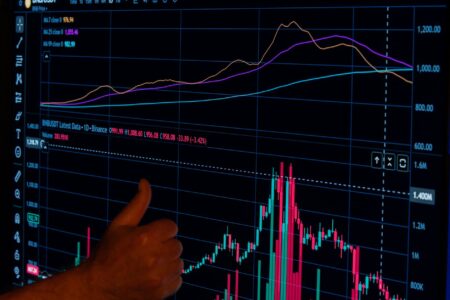
Bank of America has been tracking which corners of the market are already starting to reprice around the possibility of a deal. The bank’s analysis identifies specific asset classes that stand to benefit if diplomacy moves from rumor to reality. That kind of forward positioning – buying before a deal is confirmed – carries risk, but it also reflects how institutional money tends to move: ahead of the news, not after it.
The political dimension here is worth sitting with. Trump has consistently used economic leverage as a foreign policy tool, and Iran has been under a sustained pressure campaign through sanctions. A peace deal, or even a preliminary agreement, would represent a significant reversal of that posture. Markets are not waiting for the policy papers to be signed before starting to adjust.
What Bank of America Is Watching – and What It Means for Portfolios
Bank of America’s recommendation that investors position themselves ahead of a potential Iran peace deal places the bank in the middle of a broader debate about geopolitical risk pricing. For much of the past several years, the risk premium embedded in oil and certain emerging market assets has been elevated partly because of Iran-related uncertainty. A diplomatic resolution would logically compress that premium, which is where the trade opportunity lies.
Oil itself is the most direct variable. Iranian crude, largely locked out of international markets by sanctions, represents meaningful supply that could re-enter if a deal holds. The expectation alone – not even actual barrels hitting the market – tends to push prices down. That’s a straightforward negative for energy producers and a positive for airlines, shipping companies, and any business running large fuel bills. Travel stocks have already shown sensitivity to ceasefire speculation, with some names moving sharply on headlines before pulling back as uncertainty returned.
Beyond energy, emerging market assets tied to the broader Middle East and to global risk appetite tend to respond to geopolitical de-escalation. When a persistent source of regional tension begins to fade, capital that had been sitting on the sidelines or parked in safe-haven positions starts looking for yield elsewhere. That rotation can benefit equities in certain developing markets as well as currencies that had been under pressure.
The inflation angle connects directly to the earnings story. If oil prices decline meaningfully because of a deal, input costs fall for a wide range of industries – transportation, manufacturing, consumer goods. Companies that have been watching their margins squeezed by elevated energy costs would see some relief, which flows through to earnings. This is why Bank of America’s framing matters for investors focused on corporate results, not just macroeconomic headlines.
There is a counter-argument, of course. Peace deals with Iran have been attempted before, most notably the 2015 Joint Comprehensive Plan of Action, which was later abandoned by Trump in his first term. Any new agreement would face immediate scrutiny over its durability and enforcement mechanisms. Markets have been burned by premature optimism on this front before, and the skeptics inside institutional investment teams are not quiet. The question of whether a deal can actually hold is separate from whether assets will rally on the announcement – and those two things can diverge significantly.
Bank of America’s note also comes against a backdrop of broader market sensitivity to any development that could ease inflation pressure. The Federal Reserve has been navigating a difficult path, and anything that takes persistent upward pressure off energy prices gives the central bank more breathing room. Lower oil prices don’t automatically translate into lower rates, but they reduce one of the more stubborn inputs driving headline inflation figures – which is the number most Americans actually feel.
The Timing Problem and What Comes Next
Positioning for a peace deal before it happens means accepting that the timing could be wrong by weeks, months, or indefinitely. Asset prices that have started to reflect optimism could reverse sharply if talks collapse or if a preliminary agreement falls apart under domestic political pressure – in either Washington or Tehran. That asymmetry is what makes this a genuinely difficult trade, even when the directional logic is sound.

What makes the Bank of America call notable is the specificity of the political pressure it identifies as the driver. Trump’s approval ratings and the jump in inflation are not abstractions – they are measurable, trackable, and they tend to move policy in ways that financial models sometimes underweight. Whether a deal materializes in weeks or gets mired in the same diplomatic friction that has defined U.S.-Iran relations for decades, the fact that a major bank is mapping out the trade in detail suggests this scenario has moved from theoretical to genuinely contingent.