


A Day After the Selloff, Traders Move On
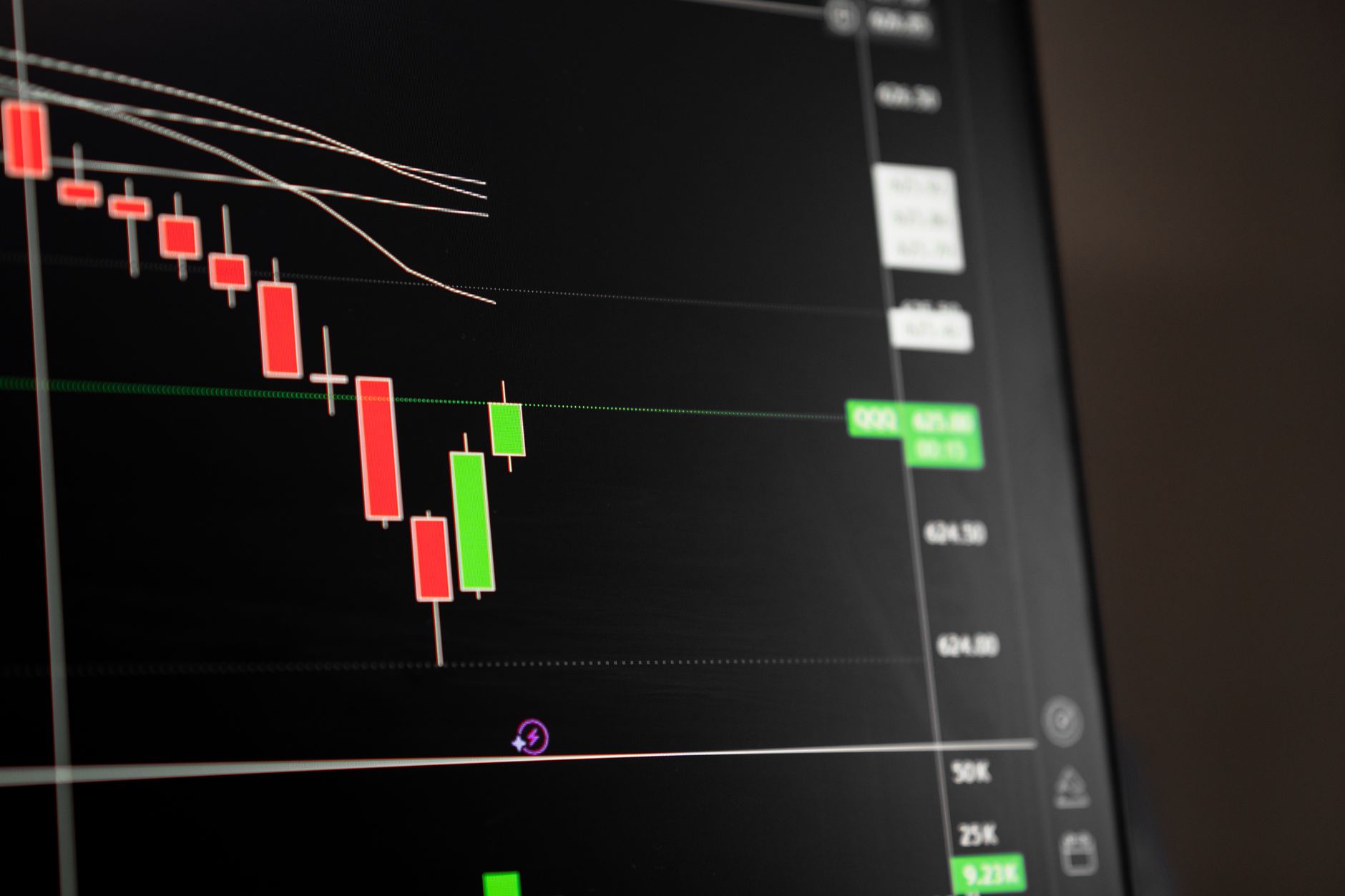
Stock futures climbed Thursday morning, offering a partial recovery after major indexes fell sharply the prior session, as investors appeared to set aside concerns over U.S. military strikes against Iran. The moves suggested that, at least in financial markets, the latest escalation between Washington and Tehran was being priced as a contained event rather than the start of a prolonged confrontation.
Oil slipped.
That decline in crude prices reinforced the market’s collective read on the situation – if a direct U.S. attack on Iran isn’t pushing energy prices higher, traders are clearly not betting on a supply disruption severe enough to ripple through the global economy. The combination of rising futures and falling oil told a fairly coherent story about where investor confidence stood Thursday morning, even if Wednesday’s session had looked considerably darker.
Oracle’s AI Bill Comes Due
Oracle was the session’s most notable casualty among individual stocks, with shares dropping after the company reported data-center spending that came in higher than analysts had expected. The pattern is becoming familiar across the technology sector: companies that have staked their growth narratives on artificial intelligence infrastructure are discovering that the capital requirements involved are steep, and that Wall Street’s patience for elevated spending varies considerably depending on what else is going on in the market.
For Oracle specifically, the issue isn’t whether AI demand is real – it’s whether the cost of building out the capacity to meet that demand will compress margins before the revenue catches up. Data centers require enormous upfront investment in hardware, power infrastructure, and cooling systems, and those costs hit the income statement well before enterprise customers begin generating meaningful AI workloads. When spending overshoots forecasts, even by a relatively modest amount, it tends to raise questions about how long the gap between investment and return will persist.
The drop in Oracle shares stood in contrast to the broader movement among AI-linked stocks, which gained on Thursday. That divergence matters. It suggests investors aren’t souring on artificial intelligence as a category – they’re making finer distinctions between companies that appear to be managing their AI build-out efficiently and those where the spending trajectory looks harder to control. Oracle, at least for now, landed on the wrong side of that comparison. For investors still weighing how to think about the company’s long-term position, the question of whether a stock’s AI story is properly understood by the market cuts in multiple directions.
Geopolitical Risk, Briefly Priced In
Wednesday’s plunge in major indexes reflected the initial jolt of uncertainty that tends to accompany any direct military action involving the United States and a major oil-producing nation. Iran sits at the center of a region that supplies a significant share of global crude, and any meaningful disruption to that flow would carry consequences well beyond the energy sector. The selloff made sense as a reflexive response.
By Thursday, however, the calculus had shifted. Futures pointing higher and oil moving lower suggested that traders had assessed the situation overnight and concluded that the strikes – whatever their strategic or geopolitical significance – did not appear to be triggering the kind of supply-side shock that would force a fundamental reassessment of energy prices or economic growth. Markets are often better at processing geopolitical events quickly than they are at predicting them in advance, and the Thursday morning recovery fit that pattern. The speed of the reversal also reflected how conditioned investors have become to short-cycle risk events: absorb the news, evaluate the material impact, and reprice accordingly within hours rather than days.
Whether that confidence holds depends on how events develop. A single session’s recovery doesn’t erase the underlying tension, and oil markets in particular remain sensitive to any signal that the conflict could broaden. For now, though, the market’s message was relatively clear: the U.S.-Iran exchange, as of Thursday morning, was being treated as an incident rather than a turning point.

What Comes Next for the Indexes
The broader question hanging over equity markets isn’t really about Iran or Oracle in isolation – it’s about how much resilience remains in an index-level rally that has absorbed repeated shocks over recent months. Major indexes sinking sharply on Wednesday and then seeing futures recover Thursday morning is, in one sense, encouraging. In another sense, it reflects how much the market’s day-to-day direction has become hostage to news flow that is almost impossible to forecast: military strikes, earnings surprises, central bank commentary, and data releases all competing for the same investor attention.
AI-tied stocks gaining even as Oracle fell points to a market that is still broadly willing to fund the artificial intelligence buildout, provided the individual companies involved can demonstrate some discipline around costs. That selective enthusiasm is probably healthier than a blanket rally across every stock with an AI connection, but it also means that any company reporting data-center spending above expectations is going to face a version of what Oracle experienced Thursday.
The session ahead will test whether the futures recovery translates into actual index gains once trading opens, or whether Wednesday’s losses were deep enough to make buyers cautious about stepping back in too quickly. Oracle’s data-center spending number is already on the table. The next question is whose number lands next – and whether it lands above or below the line that separates a stock that rises with the AI tide from one that gets left behind by it.