


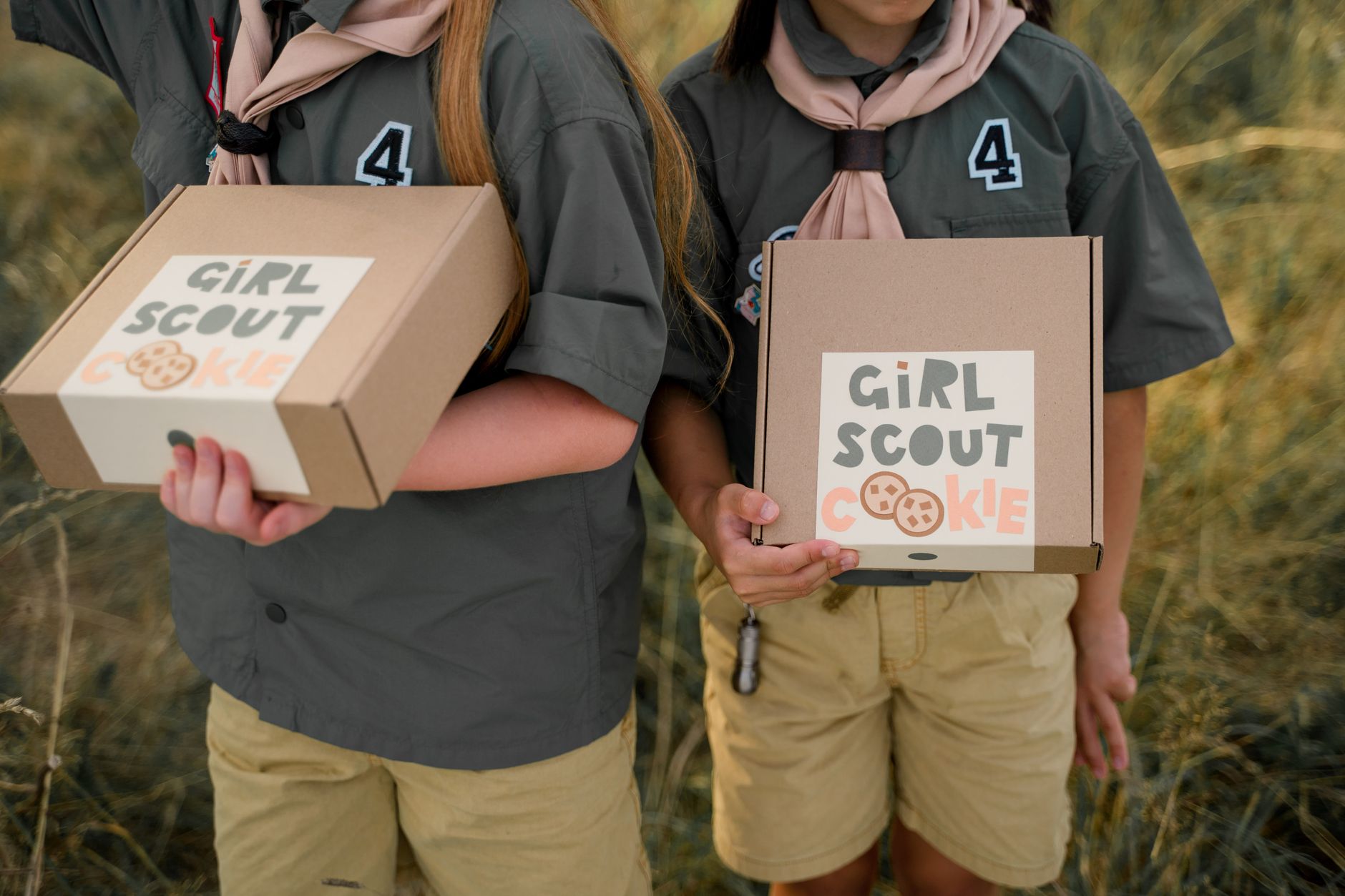
A knock at the front door. A folding table outside a store. A link that lands in an inbox. The Girl Scout cookie reaches buyers by all three routes, and each one ends the same way: money changes hands, a box changes hands, and a charitable gift travels inside the same package.
That pairing is why the cookie deserves a place in a conversation about the economy and not just one about nostalgia. Few consumer products carry a built-in purpose that the buyer understands before the first sentence of the pitch. The cookie has also become an emblem of empowerment, a small commercial object that stands for something larger than its price tag.
Three Doors Into the Same Transaction
Start with the channels, because they show how an old tradition keeps adapting. Door to door is the original image: a young seller, a customer who knows the routine, and a decision made in under a minute. It is retail stripped to its basics, with no shelf space, no advertising budget and no checkout line. The product sells because the person offering it is standing right there.
The store table changes the setting but not the logic. A shopper on an ordinary errand meets a seller placed at the exit, and the purchase becomes an impulse that doubles as a good deed. Foot traffic does the work that a neighborhood route once did. The seller gains volume of passersby, and the buyer gets a quick way to act on goodwill without planning for it.
Online selling is the newest door, and it matters most for how far the tradition can stretch. A cookie sale no longer depends on who lives nearby or who happens to walk past a table. Relatives in another state, former neighbors and friends of friends can all take part. Yet the appeal is unchanged. The “time-honored tradition” survives because it still works whether the customer is on a porch, in a parking lot or at a keyboard.
Those three channels share one feature: the seller is visible. Even online, the purchase is tied to a particular girl and a particular troop.
A Purchase That Doubles as a Gift
Most products ask a buyer to weigh price, quality and convenience. The Girl Scout cookie adds a fourth question that most buyers answer before they are asked: is this worth supporting? The sale wraps charity and cookies into a single item, so the customer does not have to pick between buying a snack and giving to a cause.
That bundling shifts how the money feels. A shopper who would never think twice about a grocery-aisle box may pay without hesitation when the same kind of purchase carries a purpose. The cookie is a treat, but it is also a small donation with a flavor attached, and that gives it a standing in the household budget that ordinary snacks rarely get.

Why the Cookie Became an Emblem
The word “empowerment” attaches itself to this product for a reason. The seller is a girl, and she is the one making the case, handling the exchange and closing the sale. That makes the cookie campaign less like a fundraiser run by adults and more like a first job, one with a product, a customer and a result she can see.
Consider what each sale demands. She has to approach a stranger or a neighbor, explain what she is offering, handle a yes or a no, and take payment. None of that requires a spreadsheet, but all of it is commerce in its earliest form. The early lessons are about asking, listening and following through, and they are the same ones that sit under much larger enterprises.
Repetition is the other piece. A seller who hears “no” at one house and “yes” at the next learns quickly that rejection is part of the process and not a verdict. By the end of a season she has practiced the same short conversation many times, and the practice builds confidence in a way that a classroom exercise on selling would struggle to match.

Meanwhile, the customer gets something too. Buying from a child who is learning to sell is a way of investing in her, and the cookie is the receipt. When the box is empty, the tradition has already done its work, and the next knock at the door is only months away. Who will be on the other side of it?