

Rethinking What “Value” Actually Means
Christopher Tsai, president and chief investment officer of Tsai Capital, is arguing that Tesla and SpaceX belong in the same conversation as classic value stocks – not because they trade cheaply by traditional measures, but because the definition of value investing is itself changing. His position challenges the conventional separation between growth and value that has dominated portfolio theory for decades.
The argument is provocative on its face. Tesla trades at multiples that would make Benjamin Graham wince, and SpaceX is not even publicly listed. Yet Tsai sees both companies as candidates for what he describes as the next evolution of value investing – a framework that weights future dominance over present-day book value or price-to-earnings ratios.
The Case Tsai Is Making
Traditional value investing, as codified by Graham and later popularized by Warren Buffett, centers on buying assets for less than their intrinsic worth – typically measured through earnings, tangible assets, or cash flows relative to price. The discipline has a long track record, but its practitioners have struggled in an era where the most valuable companies are built on intellectual property, network effects, and technological moats rather than factories and inventory.
Tsai’s reframing suggests that companies like Tesla and SpaceX carry a different kind of undervaluation – one rooted in the market’s incomplete understanding of where certain industries are heading. In his view, Tesla is not simply an automaker with an inflated stock price. It is an energy and technology company whose valuation, measured against its long-term trajectory in autonomous driving, battery storage, and grid-scale energy, may actually be conservative. SpaceX, similarly, occupies a near-monopoly position in commercial launch services that has no obvious precedent for comparison.
That framing matters because it shifts the evaluative lens away from current earnings toward structural positioning. A company does not have to be cheap today to qualify as a value investment under Tsai’s model – it has to be underpriced relative to what it will control tomorrow. Whether that logic holds depends entirely on execution, which neither company has fully proven at the scale being assumed.

What This Means for Investors Watching Both Names
For public market investors, the Tesla argument is at least testable. The stock is liquid, reported earnings are public, and analysts can debate margins, delivery volumes, and energy storage revenue quarter by quarter. Tesla’s actual financial performance – including its recent margin compression as the company has cut prices aggressively to defend market share – is part of any honest valuation conversation.
SpaceX is a harder case because it offers no such transparency. The company remains privately held, meaning retail investors have no direct access, financial disclosures are minimal, and any valuation assigned to it is largely speculative. Tsai’s inclusion of SpaceX in a value framework, however intellectually interesting, asks investors to accept a premise they cannot independently verify through public filings.
The Broader Shift in How Asset Managers Pitch Risk
Tsai Capital’s positioning is notable not just for the companies named but for what it signals about how fund managers are competing for attention and assets in a crowded field. Describing high-multiple, high-profile names as “value” stocks is a way of resolving the tension that many investors feel between wanting disciplined portfolio management and wanting exposure to the companies dominating headlines. It is a marketing argument as much as an investment thesis.
That does not make it wrong. Some of the most durable wealth creation in market history has come from investors who were willing to pay prices that looked expensive against current fundamentals – and who turned out to be right about the long arc of a business. Amazon looked absurdly priced for most of the 2000s. Investors who held through the volatility were eventually vindicated by a business that generated cash flows nobody had modeled correctly. Tsai is implicitly invoking that kind of patience as the intellectual foundation for calling Tesla and SpaceX value plays.
The risk, of course, is that the analogy fails. Amazon’s dominance in e-commerce and cloud infrastructure was built on businesses that, while novel, operated in markets with relatively clear demand curves. Tesla is navigating an automotive industry undergoing simultaneous pressure from legacy manufacturers, Chinese competitors with lower cost structures, and a broader consumer pullback on electric vehicles in some major markets. Morgan Stanley has made similar contrarian calls on other high-multiple tech names, arguing that temporary price dislocations mask long-term strength – a thesis that has worked in some cases and badly misfired in others.
Tsai’s framework also raises a practical question for anyone managing money against a benchmark: how do you size a position in a company whose value depends on outcomes that may not materialize for ten to fifteen years? Value investing, in its original form, was partly attractive because the feedback loop was relatively short. You bought something cheap, the market recognized the mispricing, and you were proven right or wrong within a reasonable period. Extending that timeline to a decade or more does not make an investment wrong, but it does change what kind of investor can afford to hold it – and what happens to fund flows if the thesis takes longer than expected to pay off.
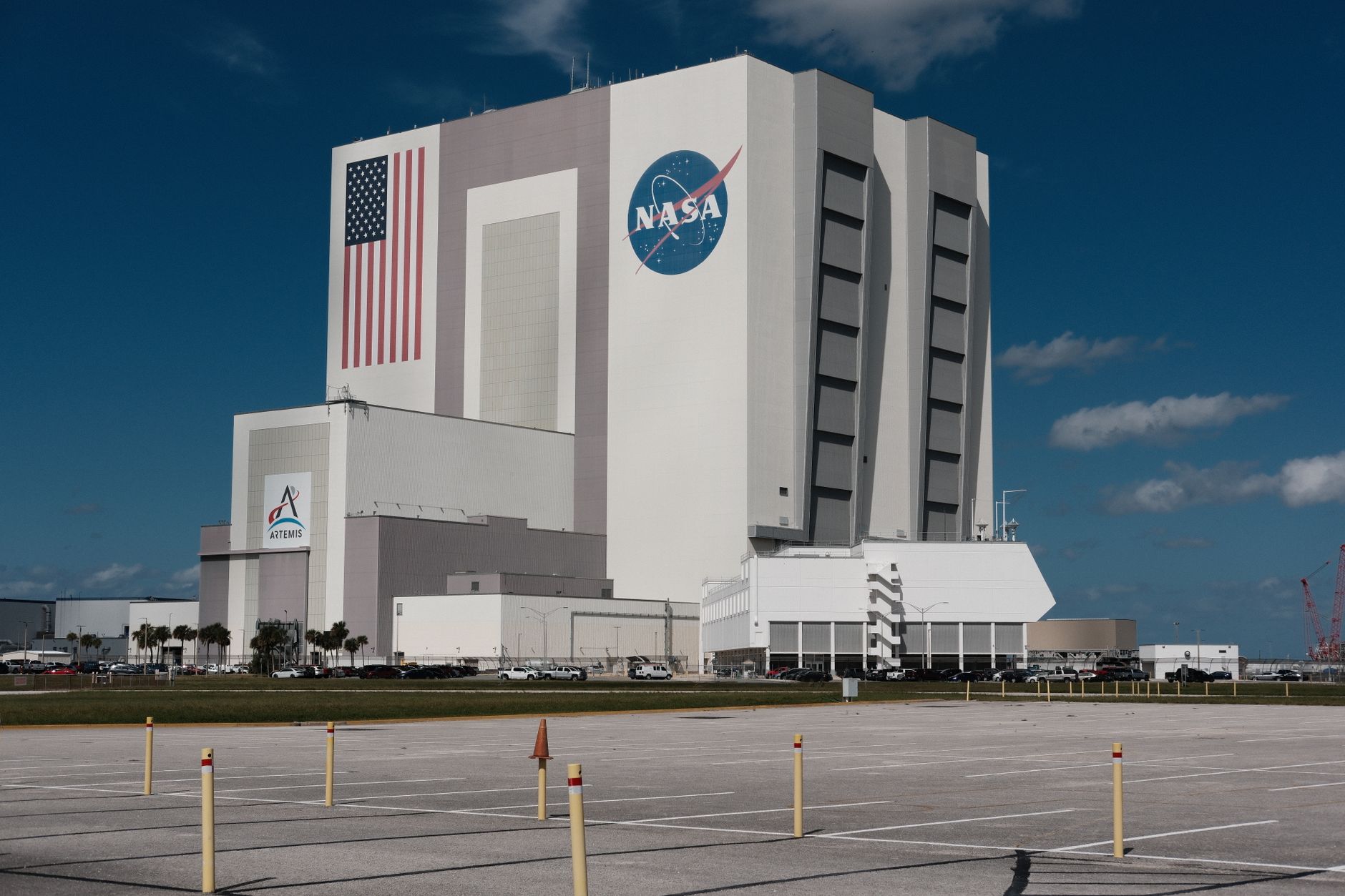
SpaceX is currently valued in private markets at figures that would rank it among the largest aerospace and defense companies in the world. That valuation is being carried by investors who are, by definition, illiquid and committed for an indefinite period.