

A Concentrated Bet That Ran Out of Room
By the close of the first half of 2026, the Situational Awareness fund was carrying a position structure that left almost no margin for error. More than three quarters of the entire fund was concentrated in just five stocks – and every single one of them was, at its core, a direct wager on artificial intelligence. The timing could not have been worse: that concentration peak sat right at the edge of a significant sector correction.
Two of those five positions alone accounted for 56% of the fund’s total holdings.
The investor running Situational Awareness had earned the informal title of “AI stock god” – a label that carried real weight in a market environment that had rewarded AI-adjacent conviction for years. What the nickname did not account for was the structural fragility that comes when a fund’s identity and its portfolio become the same thing.
How Concentration Risk Actually Plays Out
Concentrated funds are not inherently reckless. Some of the most durable long-term track records belong to managers who refused to diversify for diversification’s sake. The logic is straightforward: if you have genuine conviction in a small number of positions, spreading capital across dozens of names dilutes the upside without meaningfully reducing risk. The Situational Awareness fund appeared to operate on exactly that philosophy – and for a period, it worked.
The problem with a five-stock portfolio tied to a single theme is that it eliminates the usual buffers. When a sector rotates or corrects, a diversified fund loses ground in one corner of its holdings while others absorb the shock. A fund where 75%-plus of assets sit inside one thematic cluster does not have that cushion. Every dollar in the fund is exposed to the same directional risk, and a correction in AI-linked equities does not leave much untouched when AI is essentially the whole portfolio.
The 56% figure for just two stocks makes that dynamic sharper. Even if the remaining three positions had held up, two names carrying more than half the fund’s weight means their price movement – down – determines the fund’s fate almost entirely. That is not a concentration strategy. That is a single trade dressed up as a portfolio. Across other corners of the market, credit investors were already flagging similarly lopsided risk in AI-linked exposure.
The Correction and What It Exposed
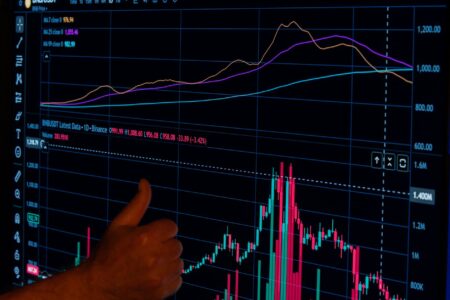
The sector correction that arrived at the midpoint of 2026 did what corrections do – it compressed valuations and punished the positions with the least room to fall. Funds that had ridden AI enthusiasm through a prolonged expansion found that the same momentum working in their favor on the way up reversed with equal force. For a fund already sitting at more than 75% in five names, there was no rotation possible, no rebalancing that could happen fast enough to matter.
What the collapse of the Situational Awareness fund illustrates is the gap between a thesis being correct and a portfolio being built to survive. The AI thesis – that a small number of companies would capture enormous value from the infrastructure and software buildout – was not necessarily wrong. Being right about a theme and being positioned correctly within that theme are different problems. A fund that cannot weather a 20% to 30% sector drawdown, regardless of long-term direction, is not managing risk; it is deferring it.
The “AI stock god” framing deserves particular attention here. Labels like that, applied to investors during extended bull runs in a single sector, tend to reflect recency bias more than analytical rigor. The manager’s conviction read as genius when prices rose and as recklessness when they fell – but the portfolio structure itself did not change between those two moments. Only the market’s verdict on it did.
As of the end of the first half of 2026, the Situational Awareness fund had reached a point where more than three quarters of its capital sat in five AI stocks, two of which alone held 56% of assets – and the correction that followed left investors asking whether anyone actually stress-tested what happened if the sector moved the other way for more than a quarter.