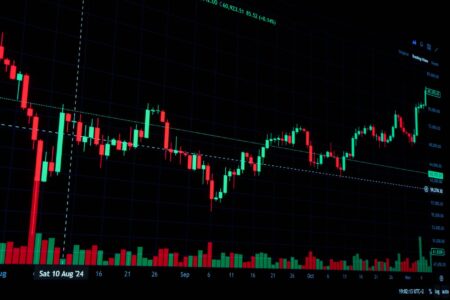



A Market Caught Between Two Bad Choices
Real 30-year interest rates have climbed to their highest level since November 2008, and Bank of America strategist Michael Hartnett is not sugarcoating what that means for investors sitting on either side of the asset divide. Bonds look dangerous at these levels. Stocks, despite their recent resilience, are not the obvious refuge either. Hartnett’s message to clients this week was direct: neither a bond buy nor a stock sale is the right move right now.
The position investors find themselves in is genuinely uncomfortable – financial conditions have tightened significantly, and the summer ahead is shaping up to deliver more pressure than relief. Hartnett is telling investors to prepare for a chilly summer, which from a strategist of his standing is not a throwaway line.

What Rising Real Rates Actually Mean
Real rates – interest rates adjusted for inflation – carry more weight than nominal figures when measuring the true cost of borrowing and the genuine return on safe assets. When real 30-year rates sit at levels not seen since late 2008, the implications spread across virtually every asset class. In 2008, those elevated rates coincided with one of the most severe financial dislocations in modern memory. The environment today is structurally different, but the rate signal itself demands attention.
Higher real rates make long-duration bonds mathematically vulnerable. As rates rise, existing bond prices fall – a basic inverse relationship that has already burned fixed-income investors repeatedly over the past three years. Buying bonds now means accepting that risk at a moment when real yields are at a 16-year peak, a bet that rates have reached their ceiling. Hartnett is not convinced they have.
On the equity side, tight financial conditions tend to compress valuations over time. When the cost of money is genuinely high – not just nominally, but in real terms – companies face higher discount rates applied to their future earnings, which pulls present valuations down. Stocks that trade on expectations of strong future profits are particularly exposed. The math works against lofty multiples when real rates are running this hot.

Tight Financial Conditions and the Summer Outlook
Financial conditions measure how easy or difficult it is to access credit across an economy – covering everything from borrowing costs and equity valuations to currency strength and credit spreads. When those conditions tighten, money becomes harder and more expensive to move, and that friction eventually shows up in corporate earnings, consumer spending, and investment activity. Hartnett’s read is that conditions have reached a level of tightness that makes a warm, expansionary summer unlikely.
The framing of a “chilly summer” carries specific weight in market strategy. Summer is already a seasonally quieter period for institutional trading and corporate newsflow. Layering tight financial conditions and elevated real rates on top of that seasonal lull creates a window where bad news has fewer natural buyers to absorb it, and where any deterioration in economic data could move markets more sharply than the underlying numbers might suggest.
Where Hartnett Is Actually Pointing Investors
Telling investors what not to do – don’t buy bonds, don’t sell stocks – is only half of a strategy. The implicit question is where capital should sit during a period when neither of the two dominant asset classes offers a clean entry point. Cash and cash-equivalent instruments become more attractive in precisely this kind of environment, particularly when short-term yields remain elevated enough to offer a real return without the duration risk embedded in longer bonds.
Hartnett’s positioning advice also implicitly favors assets that are less sensitive to rate movements and financial conditions – commodities, certain international equity markets, or sectors with pricing power that can sustain margins even when borrowing costs rise. The specific tilt matters less than the underlying logic: at real 30-year rates last seen in November 2008, the conventional 60/40 portfolio is under stress at both ends simultaneously.
This is not the first time Hartnett has issued a cautious read on market conditions in 2024 and into 2025. His track record as a contra-indicator of sentiment extremes has given his notes an outsized following on trading desks. When he says financial conditions are tight and summer looks cold, portfolio managers tend to check their exposure before dismissing the call. Whether that reflexive attention to his framing is itself a market-moving force is a separate, stranger question.

What makes the current setup particularly difficult for retail investors is that the same rate environment making bonds risky is also the one that has, until recently, kept equity markets from fully pricing in the pressure. J.P. Morgan has raised its S&P 500 target to 7,800 even while flagging flash crash risk – a split view that captures exactly how much disagreement exists at the top of Wall Street right now. Hartnett is not calling for a crash. He is saying the entry points are bad on both major assets, financial conditions are tight enough to matter, and investors heading into summer with concentrated exposure to either bonds or equities are carrying more risk than the calendar suggests they should be.