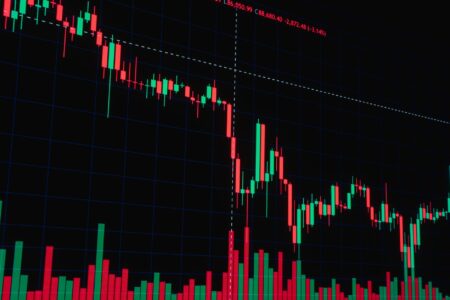



Back at the Edge of a Major Level
Bitcoin climbed back toward $80,000 on Monday, a price it had not touched since May, as momentum from the prior week carried into the start of a new trading session. The move put the cryptocurrency within striking distance of a threshold that, just a few months ago, had marked a peak before a prolonged pullback.
The immediate catalyst was the Treasury Department’s announcement of plans to buy back longer-dated Treasury securities – a policy shift in the bond market that sent investors scrambling to reassess where returns might come from in the months ahead.

What the Treasury Move Actually Did
Treasury buybacks of longer-dated bonds reduce the supply of those instruments in the market, which tends to push their prices up and yields down. When yields on long-dated government debt fall, the relative appeal of assets like Bitcoin increases – not because Bitcoin itself changed, but because the math on safer alternatives got less attractive. That dynamic played directly into last week’s surge.
The connection between U.S. debt management decisions and cryptocurrency prices would have seemed strained just a few years ago. It no longer does. Bitcoin now trades with enough institutional participation that shifts in fixed-income policy move through it the way they move through equities or commodities. The Treasury announcement gave large holders a reason to add exposure, and smaller traders followed. For deeper context on what’s driving bond market behavior right now, bond yields have stayed elevated for structural reasons that make any policy pivot toward lower long rates a signal worth acting on.
Outrunning Stocks and Gold Over Six Months
Over a six-month window, Bitcoin outperformed both equities and gold – two asset classes that typically absorb demand during periods of uncertainty. That stretch of relative outperformance is significant because it did not happen in a calm environment. Markets spent much of that period navigating rate expectations, geopolitical friction, and mixed corporate earnings data. Bitcoin gained ground anyway.
Gold has historically been the asset investors reach for when confidence in financial systems wobbles. The fact that Bitcoin beat it over six months does not mean gold lost its role – it means Bitcoin competed for the same dollars and won more of them during that window. Whether that continues depends heavily on what happens to real yields and the dollar in the next quarter.
Stock performance over the same period was also trailing Bitcoin’s gains. Equity markets have faced pressure from borrowing costs that remain elevated even after the Federal Reserve’s rate adjustments, compressing valuations in rate-sensitive sectors. Bitcoin carries none of that earnings-multiple logic – it does not have a price-to-earnings ratio, does not report quarterly results, and does not get downgraded by analysts when margins shrink. That structural difference made it easier to hold during stretches when stock investors were second-guessing growth assumptions.

The six-month comparison also matters because it filters out short-term noise. Daily or weekly moves in Bitcoin are famously volatile. A six-month horizon smooths enough of that out to show a directional signal – and that signal, at least through Monday, was pointing toward continued accumulation rather than distribution.
What $80,000 Means as a Level
Round numbers in asset markets take on weight not because of any fundamental significance, but because enough participants treat them as reference points. $80,000 was where Bitcoin last stalled in May. A clean break above it would remove overhead resistance built up during that period, when sellers who bought near the top were waiting for a chance to exit at breakeven.
If Bitcoin clears $80,000 convincingly, the next question becomes where the next cluster of resistance sits. Markets that punch through psychologically significant levels often accelerate briefly before encountering the next layer of supply. Whether that acceleration materializes depends on volume and whether institutional flows remain consistent after the initial pop.

Monday’s approach toward $80,000 was happening without the kind of speculative retail frenzy that characterized earlier Bitcoin peaks. Search trends, social media volume, and exchange inflow data – the informal gauges of retail enthusiasm – were not showing the overheated signals that typically precede sharp reversals. That absence is either a sign that the move has more room to run or that conviction on the buy side remains fragile and could unwind quickly if macro conditions shift.
The Treasury buyback plan that sparked last week’s move is not a one-time event – it is part of an ongoing debt management strategy. If the government continues buying back long-dated bonds, the downward pressure on long yields could persist, extending the conditions that sent Bitcoin higher in the first place. The question sitting underneath all of this is whether that policy holds, or whether a shift in fiscal priorities forces the Treasury’s hand before Bitcoin ever decides what to do about $80,000.