



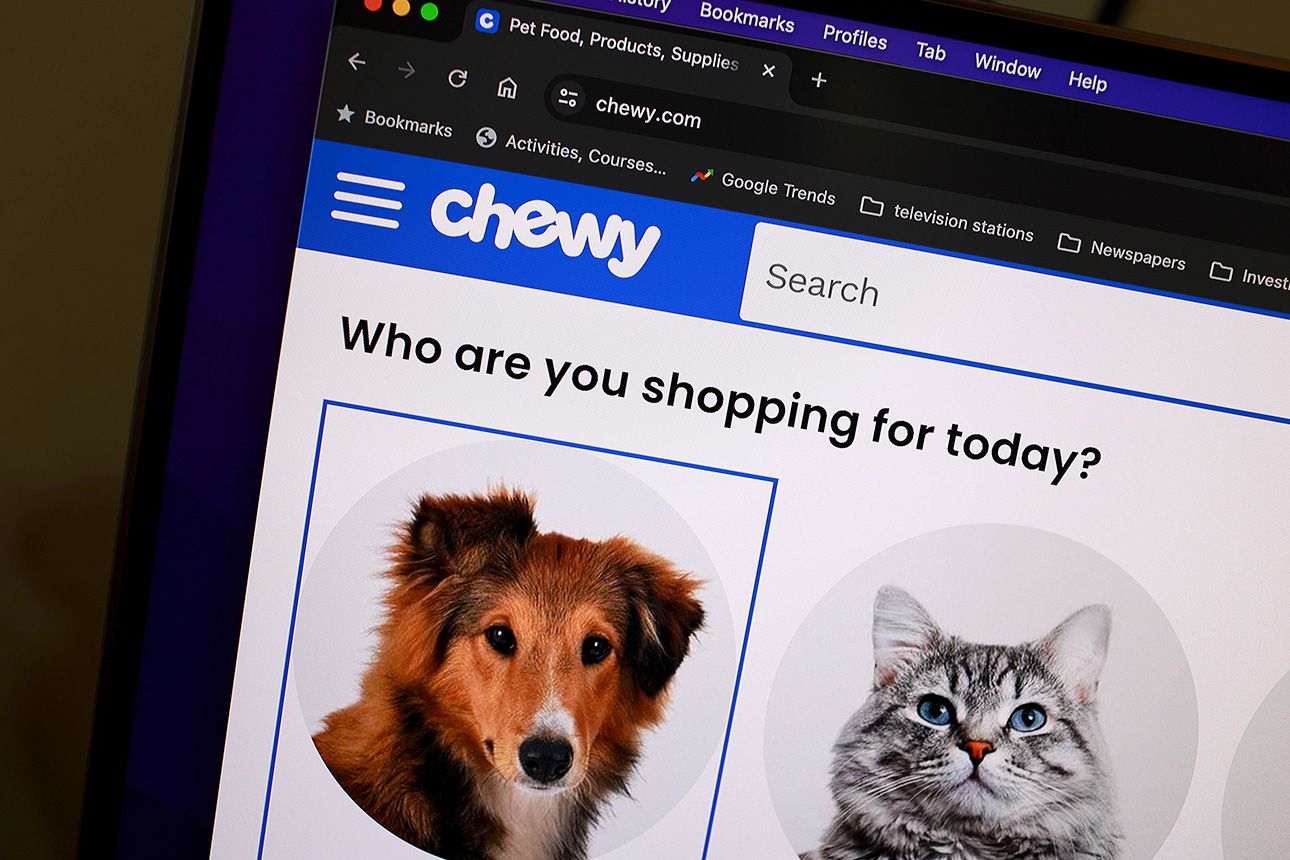
A dog owner who signs up for a recurring bag of kibble and a shopper hunting for a hand-lettered anniversary print are both spending discretionary income online. They are feeding very different businesses. Chewy’s pet sales run on subscriptions, with the same customer buying the same things on a schedule. Etsy runs a marketplace of independent sellers, where each purchase is a fresh decision and the company mostly stands between buyer and maker.
For investors weighing consumer stocks heading into 2027, the contest between the two comes down to price as much as quality. The valuation gap between them may tip the balance, and a gap that wide changes what you are really betting on. This piece lays out how to think about that choice and what each model demands from the stock you pay for it. It uses no price targets or multiples, because those move daily and any number printed here would be stale by the time you act on it.
Two Ways to Earn a Customer’s Money
Chewy sells pet products, and the subscription feature is the core of the model. A pet needs food whether the economy is booming or stalling, and a customer on autopilot is not weighing alternatives each month. That repetition gives a retailer something most never get, which is a reasonable forecast of next quarter’s orders. The cost is that Chewy is a retailer: it sources goods, holds inventory and ships boxes, so every sale carries the physical expense of getting a heavy bag of food to a doorstep.
Etsy sits on the opposite end of the spectrum. Independent sellers list the goods, set their own prices and often ship them from a spare room or a small workshop. Etsy supplies the storefront and the audience. A marketplace carries little inventory and few logistics headaches, which usually means a lighter cost structure per dollar of sales. The trade-off is demand: a handmade candle or a vintage lamp is rarely a need, and nothing guarantees the buyer comes back next month.
What the Valuation Gap Is Really Pricing
When two stocks trade at noticeably different multiples, the market is making a statement about the reliability of future earnings. Subscription revenue tends to be treated as more dependable, so a business built on it can command a premium even if its margins look thinner on paper. A marketplace can show attractive margins while being priced more cautiously, because those margins depend on shoppers feeling flush enough to buy gifts and décor. The multiple is a judgment about how long each stream of income will last.
That is why the headline gap deserves scrutiny rather than a quick conclusion. A cheaper stock is not automatically the better buy, and a pricier one is not automatically overvalued. The question is whether the discount fairly compensates for the extra uncertainty, or whether the market has become too gloomy about a business that still collects fees every time a seller makes a sale. The same logic applies to the premium: it is justified only if recurring orders keep arriving at a steady pace.
Investors hunting for mispriced consumer names face this exercise constantly. Our look at the cheap stocks AI forgot follows the same discipline: start with what the price assumes, then ask whether the business can beat that assumption.
Neither company is a pure bargain or a pure bubble just because of where it trades. Both ask for a view on how consumers behave over the next several years. Chewy asks whether pet owners will keep letting a subscription handle their routine. Etsy asks whether buyers still want something that did not come off a mass-production line.
Where Each Stock Could Disappoint
Chewy’s risk is margin pressure. Selling commodity-like products such as food and supplies invites price competition, and a retailer that ships its own inventory has less room to absorb it. If rivals discount aggressively to win pet owners, Chewy has to choose between matching them and risking subscriber loyalty. The recurring-revenue story only holds if customers stay for reasons other than inertia.
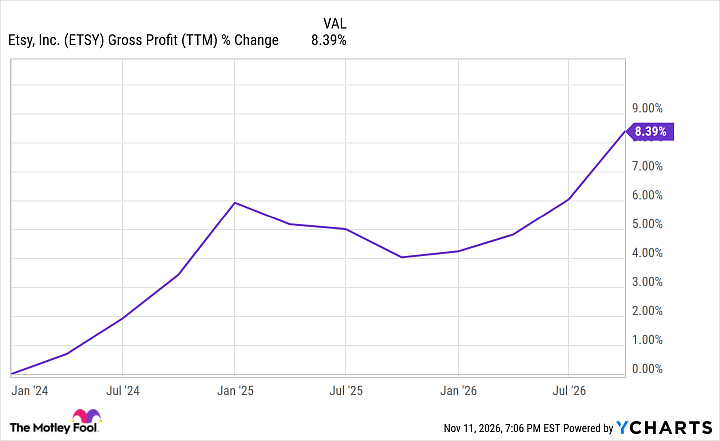
Etsy’s risk is relevance. A marketplace lives or dies by the health of its seller community and the traffic that reaches them. If shoppers drift toward larger platforms with faster shipping and lower prices, independent makers lose their audience and the fees disappear with it. Because spending on handmade goods can be postponed without consequence, a weak consumer hits Etsy sooner than it hits a pet food subscription.
Pets are cared for in downturns. Gifts, décor and keepsakes are the purchases people trim when budgets tighten.
Choosing Between Them for 2027
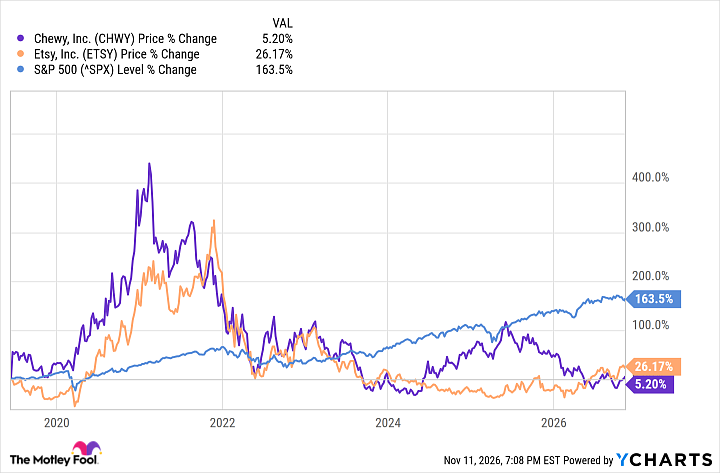
The framework is simple even if the decision is not. A buyer who wants predictability and can accept a thinner-margin retail operation leans toward Chewy, provided the premium is not already stretched. A buyer who wants a lighter business with more operating leverage, and who believes the market has priced in too much consumer fatigue, leans toward Etsy. Each case rests on a different belief about the household budget.
Before committing, check the current multiples on both names, compare how each company’s growth has held up over recent quarters, and decide which risk you would rather own: a squeeze on retail margins or a slowdown in discretionary spending. The valuation gap is the useful signal here, because it shows how much optimism is already in each share price. So which one is the market asking you to pay more for: the dog food that arrives every four weeks, or the hand-stitched gift that might never be reordered?