


A Corporate Espionage Allegation at the Top of the AI Industry
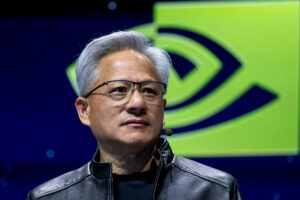
Nvidia has launched an internal investigation after allegations surfaced that its founder and CEO, Jensen Huang, was the target of a coordinated “foreign intelligence effort.” The company confirmed the probe is underway, though details about the scope, the suspected actors, and what – if anything – was compromised remain tightly held.
The allegations arrive at a moment when Nvidia sits at the center of one of the most financially consequential technology races in decades. Its chips power the AI systems being built by governments, militaries, and corporations worldwide, making Huang not just a business figure but a strategic one – the kind of executive whose relationships, travel plans, and private communications could carry intelligence value far beyond any quarterly earnings report.

What the Investigation Actually Involves
Nvidia has not publicly identified the foreign government or intelligence service believed to be behind the alleged plot. The characterization of the effort as a “foreign intelligence” operation, however, signals that the company and those advising it believe this goes beyond ordinary corporate espionage or competitive intelligence gathering. Foreign intelligence operations targeting private executives typically involve surveillance, recruitment of insiders, or attempts to cultivate access through social engineering – sometimes all three simultaneously.
Huang himself founded Nvidia in 1993 and has led the company through its evolution from a graphics chip maker into the dominant supplier of AI hardware. His personal profile has grown in step with Nvidia’s market value, which at its peak surpassed $3 trillion, briefly making it the most valuable publicly traded company in the world. That visibility carries risk. When a CEO becomes the face of a critical technology, they also become a target for anyone seeking an edge in that technology’s development or deployment.
The Geopolitical Stakes Behind the Story
The timing of these allegations is inseparable from the broader US-China technology conflict. Washington has spent the last several years restricting Nvidia’s ability to sell its most advanced chips to Chinese customers, citing national security concerns. Nvidia’s H100 and subsequent chips are export-controlled, and the company has had to navigate a shifting regulatory landscape that has repeatedly tightened those restrictions. Those export controls make Nvidia’s internal knowledge – roadmaps, architecture decisions, customer lists – potentially valuable to foreign governments trying to build competing capabilities or find workarounds.
China has not been named in connection with the alleged plot against Huang, and it would be inaccurate to draw that line without evidence. What is documented is that US officials have consistently flagged semiconductor companies as high-priority targets for foreign intelligence services, and that Nvidia, given its market position, would rank near the top of any such list.
Corporate espionage in the semiconductor industry is not theoretical. The Justice Department has prosecuted multiple cases in recent years involving alleged theft of chip designs and trade secrets, some with alleged ties to foreign state actors. Those cases involved employees, contractors, and in some instances people who had already left their companies and carried proprietary knowledge with them. The investigation into the alleged plot against Huang adds a different dimension: rather than stealing technical files, a foreign intelligence operation targeting a CEO would be angling for something more intangible – influence, access, or insight into decisions before they are made.
Nvidia’s chips are not just commercial products at this point. They are infrastructure. The same processors that run large language models for tech companies also run simulations for defense contractors and research institutions. That dual-use reality is precisely why export controls exist, and it is also why a foreign intelligence service might find the man making decisions about those chips worth watching closely.
What Nvidia Has and Has Not Said
The company has confirmed the investigation without providing significant detail, which is a standard posture when law enforcement or counterintelligence agencies may be involved. Speaking publicly about an active investigation risks compromising it, alerting subjects of the probe, or creating legal complications if the matter eventually results in charges.
Huang has not made public statements addressing the allegations directly. Nvidia’s communications around the investigation have been spare, confirming only that the company is taking the matter seriously and looking into it.

The Broader Risk Equation for AI’s Most Important Company
For investors and analysts who track Nvidia, the investigation introduces a variable that financial models are not built to price easily. Physical security risks to key executives, counterintelligence threats, and geopolitical exposure are qualitative factors that show up in annual risk disclosures but rarely drive real trading decisions – until something actually happens. The fact that Nvidia is now openly investigating an alleged foreign intelligence operation against its CEO means the theoretical has become operational.
Nvidia’s business depends heavily on its ability to operate across a complicated global landscape – selling chips to allies, navigating restrictions on adversaries, and maintaining relationships with customers in jurisdictions that sit somewhere in between. Any finding that a foreign government attempted to target Huang personally would add pressure on the company to restrict his exposure, limit certain travel, and potentially restructure how senior leadership engages internationally. Those are operational costs, even if they never show up on an income statement.
The question hanging over all of this is straightforward: what, if anything, did anyone actually obtain? An alleged spy plot that was detected early and neutralized is a very different story from one that ran undetected for months. Nvidia has not answered that question publicly – and given the nature of counterintelligence work, it may not for a long time.