

A New Kind of Offensive
Ukraine’s latest push against Russian positions has drawn attention less for the ground it gained than for how it was executed – with robotic systems playing a visible, expanding role along the front lines near Donbas and Lyman.
What the Offensive Actually Showed
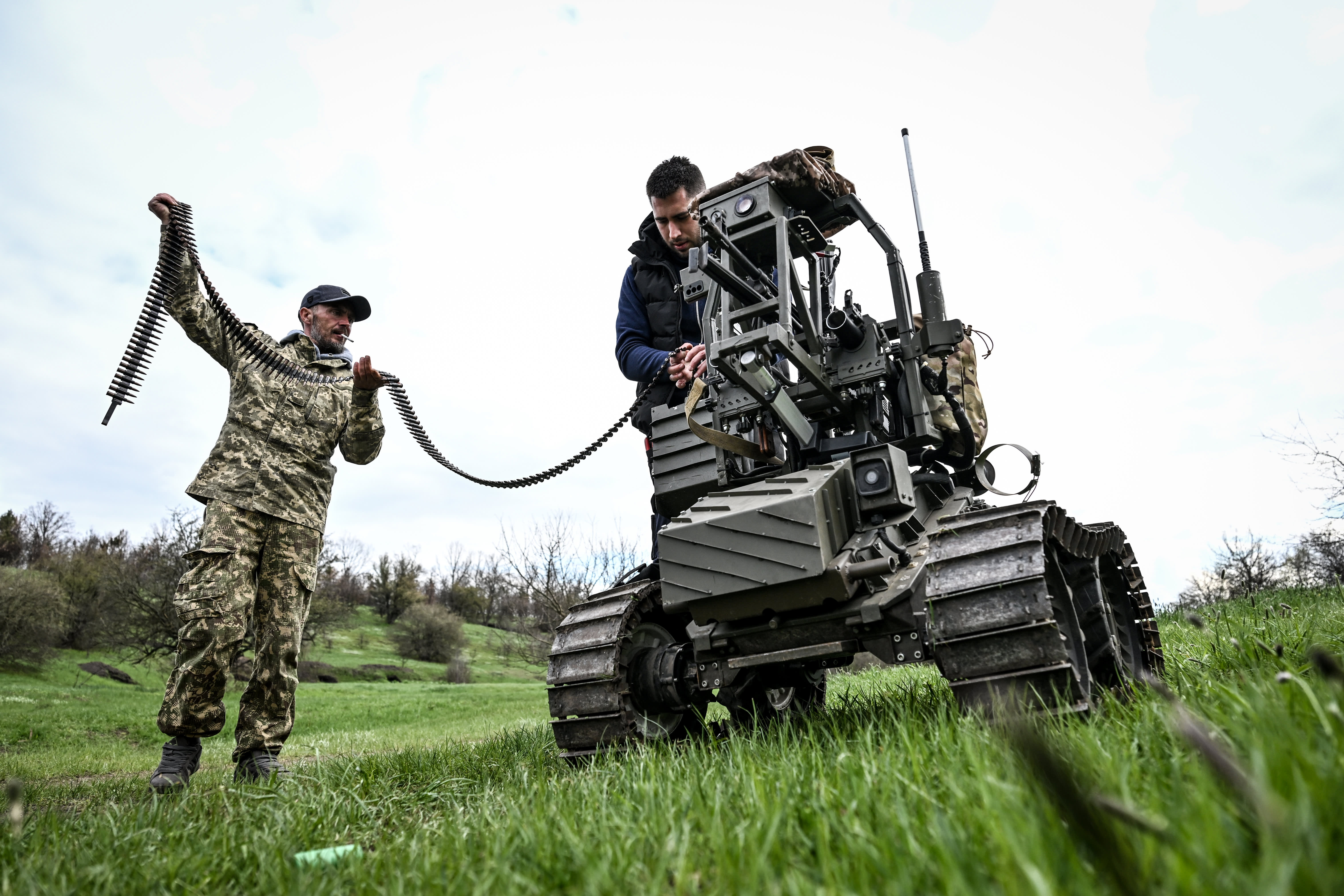
The operation did not produce a decisive breakthrough. Russian lines held in key sectors, and territorial changes remained limited. But the manner in which Ukrainian forces advanced – integrating autonomous and semi-autonomous robotic platforms into frontline movement – marked a departure from how this war has largely been fought since 2022. The machinery, not the manpower, led in certain engagements.
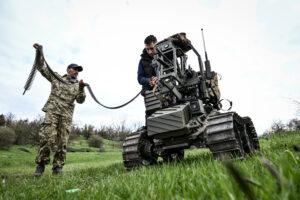
Ukraine’s use of robotic systems has been building gradually, but this offensive brought that development into sharper focus. Ground-based robots capable of carrying ammunition, evacuating wounded soldiers, and conducting reconnaissance have been deployed with increasing frequency. The Lyman axis, a stretch of contested territory in eastern Ukraine that Russia has held at significant cost, became a visible testing ground for what that integration looks like at scale.
For Russia, the implications are uncomfortable. Vladimir Putin’s military has relied heavily on numerical advantages – mass infantry, layered artillery, and sheer volume of materiel – to grind through Ukrainian defenses. A Ukrainian force that can extend its operational reach without proportionally extending its manpower exposure challenges that calculus directly. Robotic systems don’t require rotation. They don’t suffer from low morale. They don’t need to be paid.
Ukraine’s President Volodymyr Zelenskyy has publicly pushed domestic and international partners to accelerate robotic weapons development, framing it as both a military and an industrial priority. The offensive near Lyman reflects the downstream result of that pressure – systems that were in development or limited deployment a year ago are now being used in live combat conditions, refined in real time.
The Business Case Behind the Battlefield

Strip away the geopolitics and what remains is a procurement and technology story. Ukraine has been spending heavily – and selectively – on systems that reduce per-unit human cost while increasing operational throughput. That is, in effect, an industrial efficiency argument applied to warfare. The country’s defense ministry and allied backers have been channeling funds toward domestic robotics producers and international suppliers who can deliver systems quickly, in volume, and with the software flexibility to be updated as battlefield conditions shift.
The defense technology sector has taken note. Companies producing drone components, autonomous navigation systems, and battlefield logistics robots have seen demand from Ukrainian buyers – both government and private – accelerate sharply since 2023. What Ukraine lacks in the budget headroom of larger NATO members, it compensates for with speed of adoption and willingness to test unproven systems under actual combat conditions. That makes the Ukrainian front an inadvertent but highly effective proving ground for the global defense robotics industry.
Russia has its own robotics programs, but has been slower to integrate them at the frontline unit level. The gap is partly technological, partly doctrinal. The Russian military’s command structure – more rigid, more centralized – has historically been slower to absorb and deploy decentralized autonomous systems. Giving a ground robot meaningful operational authority runs against the grain of how Russian battlefield decisions have traditionally been made. Ukraine’s flatter, more improvisational command style has made adoption faster, if messier.
The economic pressure on both sides of this conflict is also shaping what each can build and buy. Russia is operating under sustained Western sanctions that restrict access to semiconductor components and advanced manufacturing equipment. Ukraine, by contrast, has Western supply chains partly open to it and has attracted foreign investment specifically targeting defense technology. That asymmetry doesn’t immediately translate to battlefield dominance, but it accumulates. Each month that Ukraine advances its robotics integration while Russia struggles to source components for its own programs widens a capability gap that manpower alone cannot close.
Defense analysts who have tracked Ukraine’s military spending note that the shift toward robotic systems is also a response to a persistent problem: Ukraine cannot match Russia’s raw population numbers for conscription. Robots don’t solve that problem entirely, but they stretch the effective reach of each soldier who remains in the field. A unit that would previously have needed six soldiers to complete a forward supply run, a reconnaissance sweep, and a casualty evacuation simultaneously can now accomplish two of those tasks with automated platforms, freeing personnel for direct combat roles. The math, multiplied across hundreds of units, starts to matter.
Putin’s Vulnerability, in Operational Terms
The vulnerability Ukraine exposed in this offensive is not territorial – it is structural. Russia’s war machine was built around the assumption that attrition would eventually exhaust a smaller opponent. If Ukraine can fight with progressively fewer human combatants per kilometer of front, that assumption weakens. The offensive near Donbas and Lyman did not shatter the Russian line, but it demonstrated that Ukraine is developing the tools to sustain pressure in ways that reduce its own human cost – exactly the kind of pressure that Russia’s strategy was designed to outlast.
What comes next is partly a question of supply chain endurance. Ukraine needs components, software updates, and replacement systems at scale to maintain and expand this approach. Russia, meanwhile, faces the question of whether it can adapt its doctrine fast enough to respond to an opponent whose battlefield tactics are being updated by the same global AI development wave reshaping industries far from any front line. The Lyman axis may not be where this war is decided – but it may be where the economic logic of automated warfare got its clearest test yet.