

When the Body Stops, the Work Doesn’t Have To
A London-based singer-songwriter is releasing new music after Parkinson’s disease stripped away his ability to play guitar – not by recovering the use of his hands, but by turning to artificial intelligence to finish what his body could no longer do. The record exists because of a tool that filled the gap between what he could imagine and what his muscles would allow.
It is a narrow, personal story. It is also a window into something much larger happening at the intersection of creative labor, disability, and machine-generated output – a question the music industry, and the broader economy of creative work, hasn’t come close to answering yet.
What Parkinson’s Actually Takes
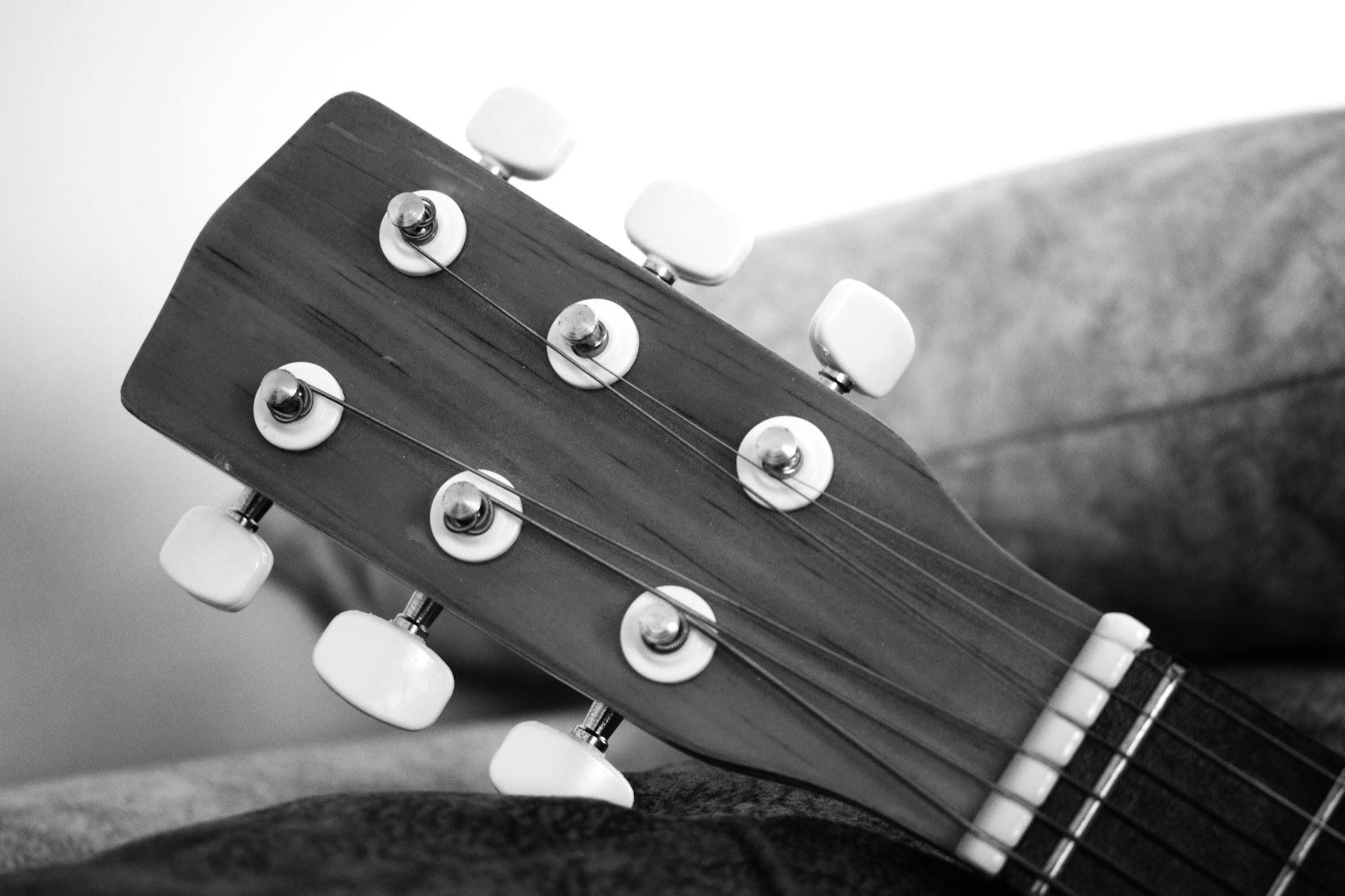
Parkinson’s disease is a progressive neurological disorder that attacks motor control. For a guitarist, this is not a setback – it is a professional extinction event. The tremors, rigidity, and loss of fine motor coordination that define the disease’s progression make the precise, repeating physical demands of playing stringed instruments functionally impossible over time. The musician in question, based in London, reached that point. The songs were still in his head. His hands could no longer execute them.
That gap – between artistic intention and physical capacity – is where AI entered. Song-generation and music-production tools powered by artificial intelligence allowed him to continue the compositional and recording process without relying on his hands to produce the instrumental output. The technology did not replace his voice, his lyrics, or his creative direction. It replaced the mechanical act his body could no longer perform.
The result is a finished record. Not a demo. Not a collection of rough ideas handed off to session musicians. A record – completed with AI assistance – that would not exist otherwise. That distinction matters, because the conversation around AI in music tends to focus on replacement and theft rather than on what happens when the alternative is silence.
The Economics of Creative Accessibility
There is an economic argument buried inside this story that rarely gets made clearly. AI music tools have been framed primarily as a threat to working musicians – capable of generating background music, jingles, and stock audio at a fraction of the cost of hiring a human. That threat is real and ongoing. But the same infrastructure also lowers the barrier for artists whose ability to produce music has been constrained by physical disability, financial limits, or geographic isolation from studios and collaborators.
The cost of recording an album through traditional means – studio time, session musicians, producers, mixing engineers – can run well into the tens of thousands of dollars for even a modest independent release. AI tools collapse part of that cost structure. For a musician with Parkinson’s who can no longer play guitar, the calculation is not “AI versus a human guitarist.” It is “AI versus no record at all.”
A Harder Question for the Industry
The music industry’s formal response to AI has centered almost entirely on intellectual property – who owns AI-generated output, whether training data was taken without consent, and whether platforms should be required to label machine-assisted recordings. Those are legitimate concerns. They are also the concerns most relevant to the industry’s existing revenue structure, not to the edge cases where AI changes who gets to make work at all.
Streaming platforms and labels have not developed any framework for how AI-assisted recordings by disabled artists should be categorized, credited, or compensated. The metadata systems that govern how royalties flow – already imperfect – have no field for “completed with AI assistance due to neurological disease.” The London musician’s record will enter a commercial infrastructure that was not built with his situation in mind and does not have the vocabulary to describe it accurately.
What AI did here was act as a prosthetic for creative production. That framing is uncomfortable for parts of the music industry that would prefer a simpler story – AI as corporate tool, or AI as threat – because it introduces a category of use that resists easy condemnation or easy celebration. A musician with a degenerative disease finishing his record is not the same story as a tech company scraping copyrighted songs to train a generator that undercuts working artists. Both involve AI. They are not the same thing.
The broader creative economy will have to develop finer distinctions than it currently has. Right now, the policy and industry debate treats AI-generated or AI-assisted music as a largely uniform phenomenon – something to be regulated, labeled, or restricted. The London musician’s situation doesn’t fit that frame, and he is almost certainly not alone. There are other artists with MS, ALS, spinal cord injuries, and similar conditions for whom these tools represent not disruption but continuation. The industry’s current posture has no good answer for them.
The Record as Economic Object
Strip away the technology angle and what remains is straightforward: a musician made a product he intends to release. The product required inputs – his voice, his compositions, his artistic judgment, and an AI tool that substituted for his hands. The record will generate streaming revenue, or it won’t. It will find an audience, or it won’t.
What it will not do is resolve the larger argument. Every stream of that record will pass through the same royalty infrastructure, the same platform algorithms, and the same industry gatekeeping as every other independent release. The AI that made it possible does not appear in the credits in any standardized way. The Parkinson’s diagnosis that made AI necessary does not appear either.
Somewhere in a London flat, there is a finished record that didn’t exist before. The guitarist who made it can’t play guitar anymore. The songs are done anyway. Whether the industry that will distribute them has any idea what to do with that fact is a different question entirely.