



Injunction Holds as First Circuit Denies Administration’s Request
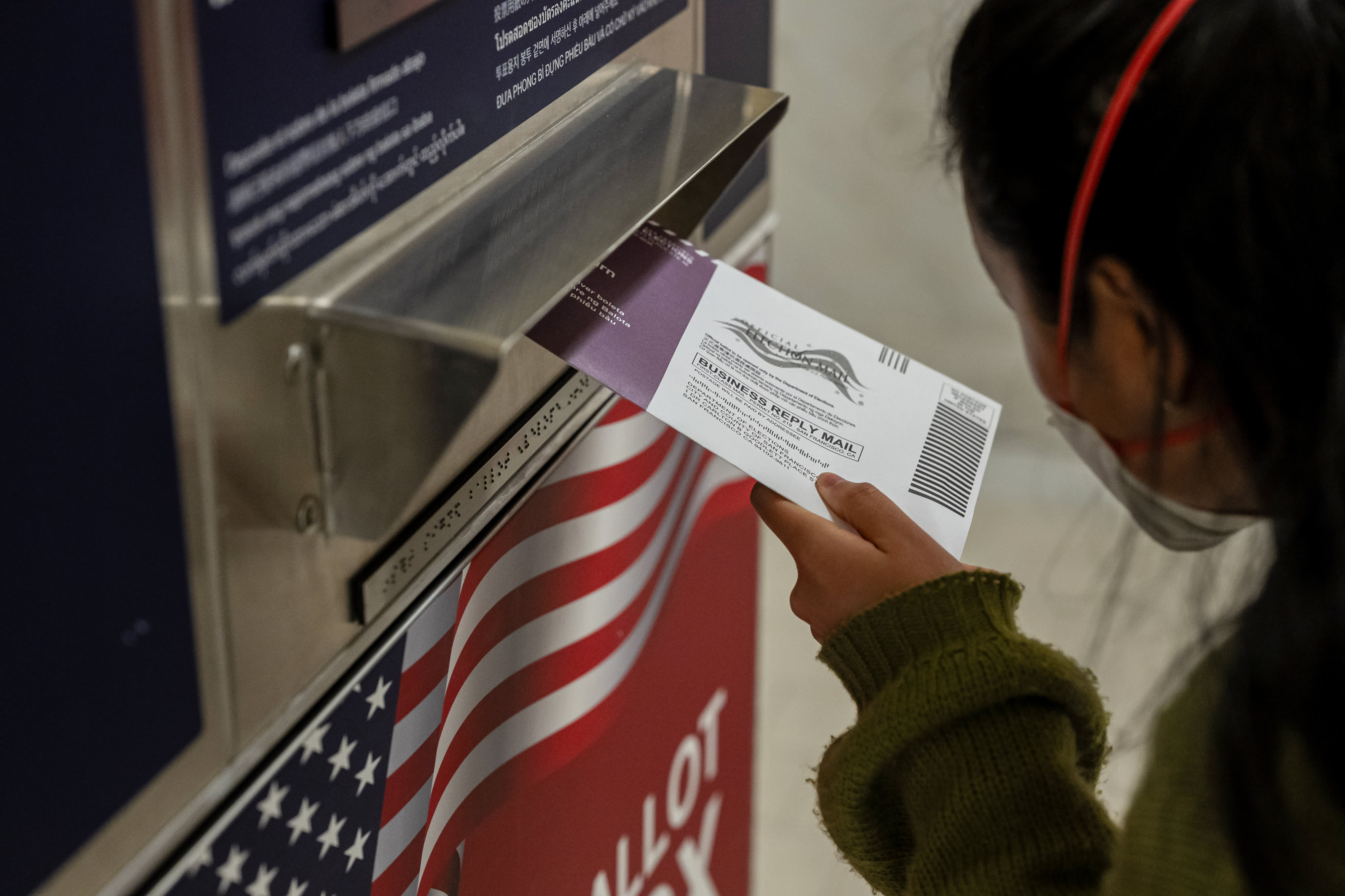
A federal appeals court has refused to let the Trump administration move forward with its mail-in voting executive order, delivering another legal setback to White House efforts to reshape how Americans cast ballots. The 1st U.S. Circuit Court of Appeals rejected the administration’s request to lift an injunction that a group of Democratic-led states had already secured from a lower-court judge. The ruling means the order remains blocked while litigation continues.
The decision carries weight beyond its immediate legal effect.
For businesses that depend on predictable election infrastructure – from campaign technology vendors and direct mail contractors to election security firms and civic engagement platforms – continued court-imposed uncertainty around federal voting rules creates real planning challenges. Contracts tied to election administration, voter outreach services, and ballot processing logistics are all downstream of policy decisions that remain, for now, unresolved in court.
What the Court Actually Decided
The 1st U.S. Circuit Court of Appeals did not rule on the underlying merits of the executive order itself. The court’s action was narrower: it declined to disturb an injunction already in place, meaning the lower-court judge’s block on implementation stays intact. That distinction matters because it leaves open further litigation on whether the order is ultimately lawful – the appeals court simply was not persuaded that the administration met the legal bar required to lift the injunction in the interim.
The Democratic-led states that secured the original injunction argued successfully at the lower court level that the executive order overstepped federal authority in ways that warranted a judicial pause. The 1st Circuit’s refusal to undo that pause signals, at minimum, that the states’ legal position is not obviously wrong – courts apply a standard that includes evaluating likelihood of success on the merits when deciding whether to keep injunctions in place.
The administration had sought to lift the injunction and move forward with the order’s provisions, a request the 1st Circuit turned down. No timeline has been established publicly for when a fuller merits ruling might come, leaving both the administration and the states that challenged the order in a period of extended legal limbo.
Business Exposure to Voting Policy Uncertainty
Election administration in the United States is a multi-billion-dollar industry touching printing and mailing companies, software developers, county-level government contractors, and third-party voter registration services. Mail-in voting, specifically, has expanded significantly over the past decade, and with that expansion came an ecosystem of vendors built around it – envelope suppliers, signature verification technology companies, ballot tracking software providers, and nonprofit voter engagement organizations funded in part through corporate giving programs.
When federal policy around mail-in voting shifts or is tied up in court, that ecosystem faces direct revenue and operational uncertainty. A vendor contracted to support expanded absentee ballot programs in a given state may find its scope of work altered depending on whether a federal order reshaping those programs can be enforced. The 1st Circuit’s ruling, by keeping the injunction in place, provides some short-term stability for vendors operating under current state-level frameworks – but the underlying policy fight has not been resolved.
States in the 1st Circuit’s jurisdiction include Maine, Massachusetts, New Hampshire, Rhode Island, and Puerto Rico. Their successful defense of the injunction, at least at this stage, means election administrators in those states continue operating under existing rules. For businesses providing services to those state governments or their election divisions, that continuity has immediate operational meaning – bids, procurement schedules, and technology rollouts can proceed on current assumptions rather than contingency plans built around a potentially enforceable federal order.

The Larger Regulatory Picture
The Trump administration’s mail-in voting order is part of a broader set of executive actions aimed at federal election policy, an area where the constitutional division of authority between the federal government and individual states has long been contested. Courts have repeatedly been asked to draw those lines in real time, and the pace of litigation has created a regulatory environment where the rules governing a fundamental civic process remain in active dispute.
For corporate legal and government affairs teams tracking regulatory risk, the 1st Circuit’s decision is another data point in a pattern: federal executive actions on election administration face immediate and often successful legal challenges from state attorneys general, with courts showing willingness to maintain injunctions rather than allow implementation while litigation proceeds. That pattern has implications for any company whose business model depends on a stable, predictable national framework for how elections are run.
The administration still has legal options, including seeking en banc review from the full 1st Circuit or ultimately pursuing the question before the Supreme Court. Whether it pursues either path – and how quickly – will determine how long the current injunction remains the operative legal reality for the states and the businesses serving them.
The lower-court injunction, secured by Democratic-led states before the 1st Circuit ever weighed in, remains standing.