


A Legal Front Opens in the Obesity Drug Wars
Novo Nordisk filed for a preliminary injunction in a U.S. court on Friday, seeking to immediately halt Eli Lilly’s advertising for its obesity and diabetes drugs – a direct legal strike that sharpens the already fierce competition between the two pharmaceutical giants.

What Novo Nordisk Is Asking the Court to Do
A preliminary injunction is not a final ruling – it is an emergency ask. Novo Nordisk is requesting that a judge step in now, before the broader case is resolved, to pull Lilly’s ads off the air or out of circulation while the litigation proceeds. That urgency signals that Novo Nordisk believes the damage from those advertisements is ongoing and not something that can simply be remedied with money later.
The move follows an existing legal dispute between the two companies. Novo Nordisk did not initiate this conflict with a preliminary injunction filing out of nowhere – the escalation suggests that earlier legal efforts have not produced the quick relief the Danish drugmaker was looking for. Pushing for an injunction raises the stakes considerably, because courts do not grant them easily. Novo Nordisk would need to demonstrate a likelihood of success on the merits of its underlying claims, as well as show that irreparable harm is occurring.
What exactly Lilly’s ads say – and why Novo Nordisk finds them legally objectionable – has not been specified in the available details. But the decision to seek injunctive relief points to advertising that Novo Nordisk believes is misleading consumers or distorting competition in a way that directly harms its market position in two of the most financially significant drug categories right now: obesity treatment and diabetes management.
Lilly has not yet publicly responded to Friday’s filing.

The Rivalry That Got Here
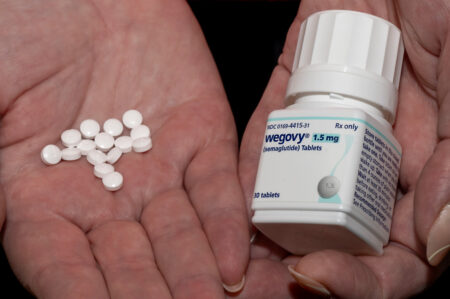
Novo Nordisk and Eli Lilly have spent the past several years locked in a two-company race that has reshaped the pharmaceutical industry’s entire center of gravity. Novo Nordisk’s semaglutide-based products – sold under the names Ozempic for diabetes and Wegovy for weight loss – built the company into Europe’s most valuable publicly traded firm at the height of the GLP-1 drug boom. Lilly came at the market from a different molecular angle with tirzepatide, sold as Mounjaro for diabetes and Zepbound for obesity, and has since narrowed the gap aggressively.
Both companies have poured billions into manufacturing capacity, direct-to-consumer advertising, and physician outreach. That advertising spend – particularly in the United States, where direct-to-consumer pharmaceutical ads are legal and pervasive – has become a battlefield of its own. When two companies are selling drugs that treat overlapping patient populations and are broadly seen as competitors for the same prescriptions, every ad one company runs is, in effect, a shot at the other’s market share.
Novo Nordisk has had a harder year than it might have anticipated. Clinical trial results for a next-generation obesity drug came in below expectations, which rattled investor confidence and put pressure on the company’s stock. That context matters for understanding Friday’s legal move. A company that felt fully secure in its competitive position would have less urgency to pursue emergency court action against a rival’s marketing. A company watching its lead erode might calculate that slowing down a competitor’s advertising – even temporarily – is worth the legal costs and the public confrontation.
Lilly, for its part, has been on an upward trajectory with Zepbound and Mounjaro, with both drugs generating substantial revenue and physicians increasingly comfortable prescribing tirzepatide as a first-line option. The company has also been expanding access through various programs, which has kept its drugs in the conversation even as supply and affordability questions persist across the GLP-1 category broadly.
Pharmaceutical advertising disputes do occasionally reach courts, but they are more commonly handled through the National Advertising Division, an industry self-regulatory body, or through the Federal Trade Commission. Seeking a federal court injunction against a direct competitor’s ad campaign is an aggressive posture – one that tends to generate as much press attention as it does legal action, which may itself be part of the calculation.
What Happens Next
A federal judge will now have to decide whether to grant the preliminary injunction, deny it, or schedule a hearing to evaluate the request more fully. If the court schedules a hearing, both sides will present arguments, and Lilly will have the opportunity to defend its advertising as accurate and legally sound. Courts can move relatively quickly on preliminary injunction requests when the claimed harm is ongoing – or they can take weeks to months, during which time Lilly’s ads would presumably continue running.

The filing puts both companies’ legal and communications teams in an uncomfortable public position. Every court document in this case has the potential to surface internal marketing strategies, competitive analyses, and claims about each other’s drugs that neither company would ordinarily want aired. Novo Nordisk is betting that the court – and the public attention that comes with it – will land in its favor. Whether a judge agrees that Lilly’s ads rise to the level requiring immediate judicial intervention is the question neither company’s stock price can fully ignore right now.