



SpaceX has built one of the most defensible commercial space businesses on the planet – government contracts, satellite internet revenue, and a launch cadence no competitor can match. But defensible operations and a defensible stock price are two different things, and investors considering a position in Space Exploration Technologies need to understand exactly where that gap lives.

The Business Case Is Real, But It’s Not the Whole Story
SpaceX operates in a way that insulates it from many of the forces that gut conventional companies during a downturn. Its Starlink satellite internet service generates recurring subscription revenue. Its launch contracts with NASA, the Department of Defense, and commercial clients are largely locked in well ahead of any given quarter. When consumer spending falls or corporate earnings shrink, those agreements don’t automatically follow.
That structural durability matters more than it might sound. Most businesses with high fixed costs – and rocket manufacturing is nothing if not capital-intensive – face brutal pressure when revenue dips, because expenses don’t compress at the same rate. SpaceX’s contract-heavy model means revenue doesn’t dip as sharply in the first place. That’s a real advantage, not a talking point.
Starlink adds another layer of insulation. Broadband connectivity is closer to a utility than a discretionary purchase for most households, particularly in rural or underserved areas where Starlink competes against nothing. Even if a recession forces households to cut expenses, satellite internet subscriptions are likely to stay on the list longer than streaming services or gym memberships.
The company has also demonstrated an unusual ability to reduce launch costs over time – something that expands its addressable market rather than constraining it. As launch prices fall, more customers enter the market, which supports volume even if individual contract values flatten. That dynamic holds regardless of whether the broader economy is expanding or contracting.
Where Shareholders Face a Different Kind of Risk
The problem for investors isn’t SpaceX’s cash flow. It’s valuation – and the way high-growth, high-multiple stocks behave when the economic mood turns dark. SpaceX shares trade in private markets and through vehicles like the SpaceX secondary market, where valuations have climbed steeply over the past several years. That means investors buying in today are paying a significant premium for future growth, and premiums compress fast when risk appetite disappears.

In a recession, investors don’t just sell bad businesses. They sell anything priced for perfection, because perfection becomes much harder to believe in when unemployment is rising and credit is tightening. SpaceX could post solid revenue through an entire downturn – Starlink subscriptions holding, government contracts executing on schedule – and still see its implied valuation fall sharply if the private market for growth assets reprices broadly. The business and the share price can move in opposite directions, and there’s nothing unusual about that. It’s how markets work under stress.
Liquidity adds a complication that public-market investors rarely face. SpaceX is not listed on a public exchange. Shares are accessible through secondary transactions and special purpose vehicles, which means selling during a downturn isn’t as simple as clicking a button. If a recession drives investors to raise cash quickly, SpaceX positions are among the hardest to exit cleanly. Bid-ask spreads widen. Buyers become scarce. What looks like a liquid asset in a calm market can behave like a very illiquid one when conditions deteriorate.
There’s also the question of what a recession does to SpaceX’s longer-term growth story – not its survival, but the pace at which the business scales. Commercial satellite broadband expansion depends partly on equipment costs and partly on customers having disposable income to pay for a new service they might not currently have. A prolonged slowdown could delay subscriber growth targets without derailing the company, but delayed growth on a stock priced for rapid expansion is still a meaningful headwind. Investors in high-multiple assets don’t just need the story to be true. They need it to arrive on schedule.
Government spending is another variable worth watching. SpaceX derives substantial revenue from federal contracts, and while defense and NASA budgets have historically been more recession-resistant than discretionary spending, they are not immune to political pressure. Budget negotiations, continuing resolutions, and shifting priorities in Congress can delay or reduce contract flows even when no formal cuts are made. SpaceX has managed these dynamics before, but they represent a real risk to timing even if not to the underlying relationship.
For investors comparing high-risk technology positions across different sectors – the kind of analysis that also applies to companies like Cerebras or IonQ – the SpaceX calculus follows a familiar pattern: strong long-run fundamentals combined with valuation risk that can dominate returns over shorter horizons. The business case and the investment case are separate arguments, and conflating them is how investors get caught flat-footed.
What Investors Should Actually Weigh
Anyone approaching SpaceX as an investment – rather than a technology story – needs to separate two questions that are easy to blur together. The first is whether SpaceX as a company will survive and grow through a recession. The evidence strongly supports yes. The second is whether SpaceX shares, at current private-market valuations, will hold their value during that same period. That answer is far less certain, and depends almost entirely on factors outside SpaceX’s control: risk sentiment, liquidity conditions, and how aggressively private-market investors reprice growth assets when the economy tightens.
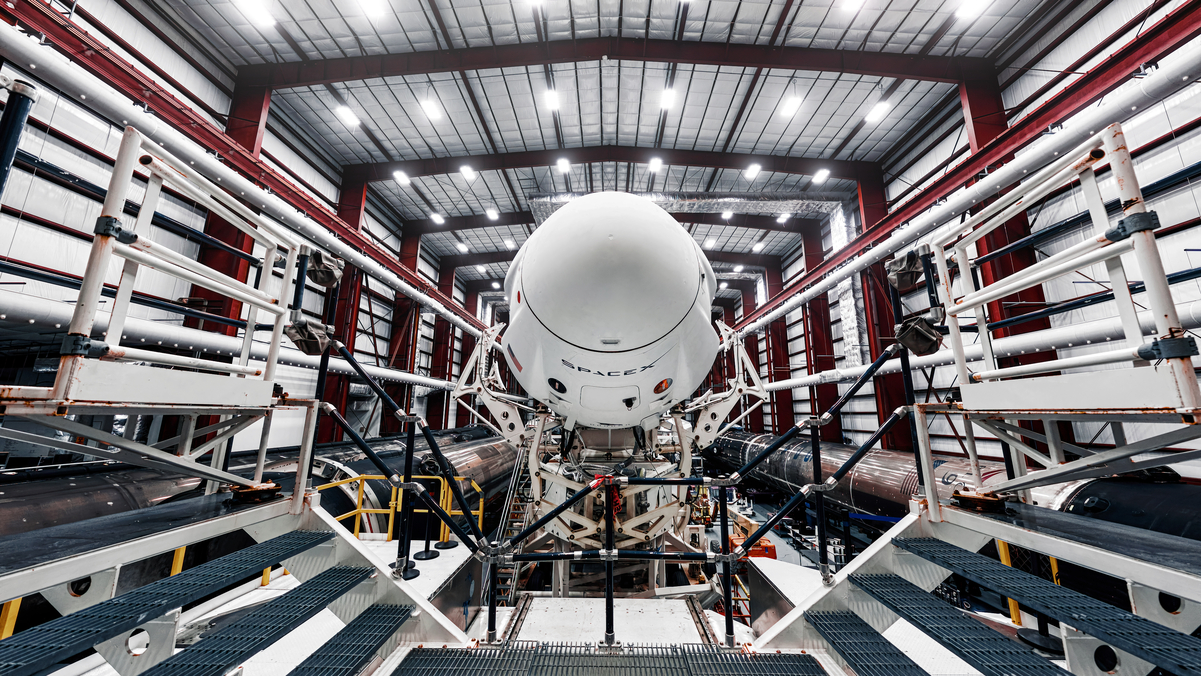
The company Elon Musk built to outlast nearly any environment might be doing exactly that – executing launches, signing contracts, adding Starlink subscribers – while investors who bought at peak valuations watch their paper gains erode. That’s not a contradiction. It’s the specific and unresolved tension at the center of owning any asset that trades at a significant premium to today’s earnings.