

A Show of Strength With a Skeptical Audience
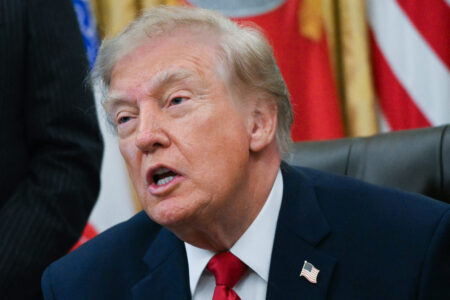
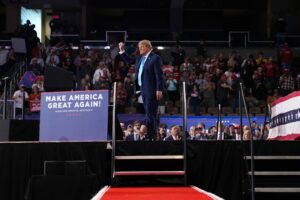
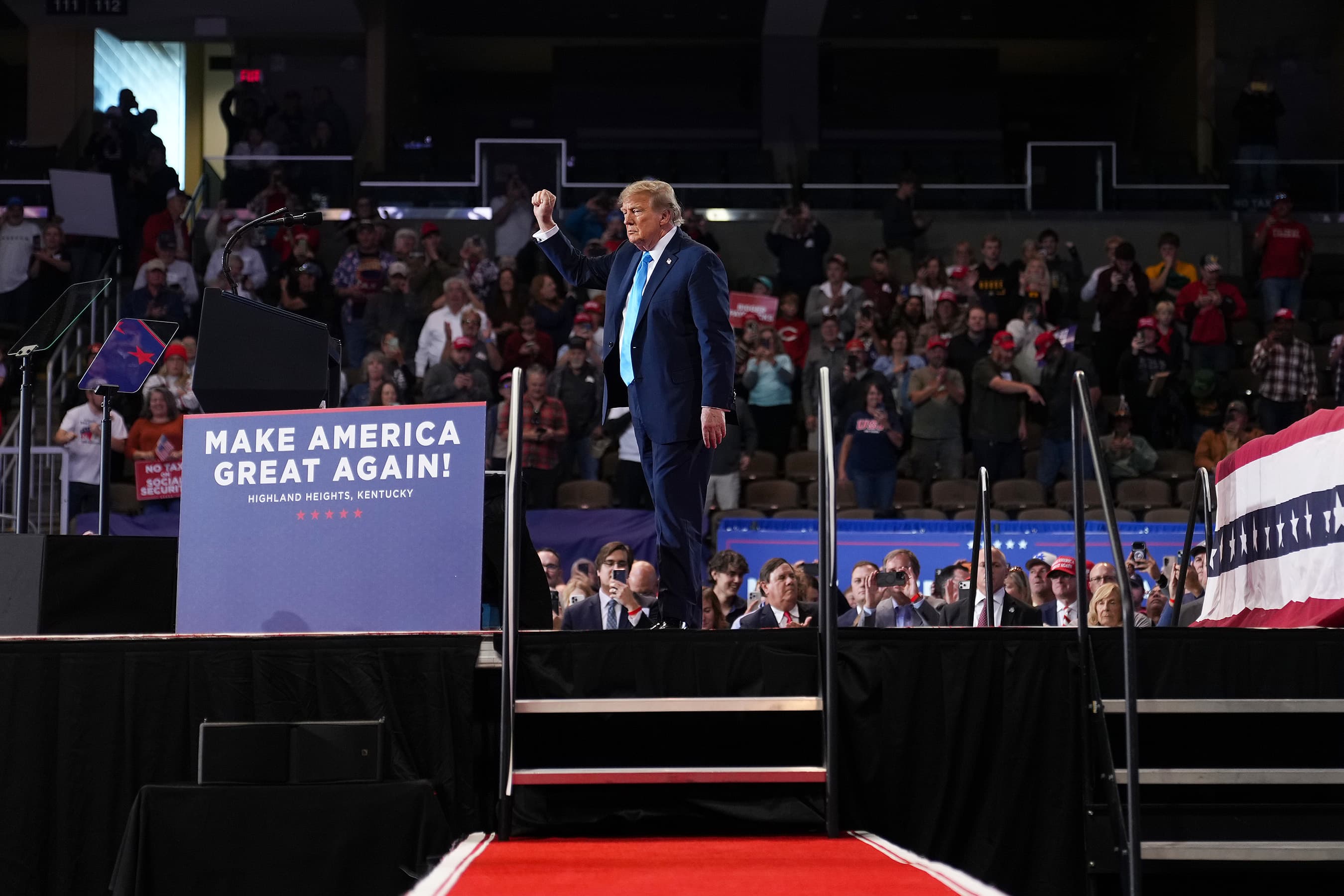
President Donald Trump traveled to Kentucky ahead of the midterm elections, staging a rally designed to energize voters and project an image of executive dominance. The event followed a pattern familiar from his first term – high-decibel claims of personal power, a loyal crowd, and a message built around the argument that his administration delivers results that no other political figure could.
What the rally could not paper over, however, is a measurable shift in how Americans are reading his motivations. Polling ahead of the midterms shows more voters now believe Trump is acting in his own interest rather than the country’s – a perception gap that carries direct consequences for Republican candidates relying on his endorsement to close races.
Political Capital as a Business Asset – and Its Limits
In political terms, a midterm rally functions the way a brand roadshow does in corporate life: it is meant to shore up loyalty, attract undecided stakeholders, and remind the base that leadership is still in command. Trump has historically been effective at this format. His ability to draw large crowds and dominate media cycles gave Republican candidates in competitive districts a genuine lift during his first term, and the party is banking on a version of that same dynamic now.
But the calculation has grown more complicated. Self-proclaimed power is a different commodity than demonstrated results, and voters – particularly those outside the committed base – are beginning to price that difference in. The claim that a president holds more authority than the office traditionally allows is not inherently disqualifying; it can read as confidence or as overreach depending almost entirely on whether the voter feels economically and personally better off. Right now, that judgment is split.
Kentucky is not a swing state, and Trump’s decision to rally there reflects a specific strategic logic: the state is reliably Republican, and a strong turnout machine there can free up resources and signal momentum for races elsewhere. The optics of a full arena in friendly territory are meant to travel – to show donors, wavering candidates, and national media that the coalition is intact. Whether that visual translates into actual voter mobilization in the districts that decide House and Senate control is a separate question the rally itself cannot answer.
The Confidence Gap and What It Costs
The friction between Trump’s projected authority and voter skepticism about his intentions is not abstract. It shows up in the kinds of decisions businesses and households make when they are uncertain about policy continuity. When voters suspect that executive decisions are driven by personal interest rather than national interest, confidence in regulatory stability, trade policy, and fiscal direction tends to soften – and that softness moves markets before it moves ballots.
That dynamic has been visible in the months leading up to these midterms. Uncertainty about which policy positions reflect governing philosophy and which reflect political positioning has made it harder for businesses to plan around the administration’s stated priorities. The rally in Kentucky did not address that uncertainty in any substantive way – it was designed to generate energy, not policy clarity.
What the Midterms Actually Decide
Control of Congress in the midterm elections determines something concrete for the business community: whether the administration retains the legislative tools to advance its economic agenda or finds itself negotiating with an opposition majority that has its own set of priorities. Tax policy, spending levels, regulatory appointments, and trade authority all run through Congress in ways that executive orders cannot fully replicate.
Trump’s argument at the Kentucky rally – that his personal power is the engine driving the country’s direction – is also, implicitly, an argument that voters should preserve his congressional majority to keep that engine running. It is a coherent pitch to his base. The problem is that voters outside that base are applying a different filter: they want to know whether power is being used for their benefit, and increasingly they are not sure it is.
For Republican candidates in competitive districts, this creates an uncomfortable arithmetic. They need Trump’s rally energy and donor network, but they also need voters who are persuadable – and those voters are precisely the ones most likely to be put off by the self-interest narrative the polls are capturing. Distancing themselves from Trump risks losing the base; embracing his framing risks losing the middle. Most are attempting a careful balance that satisfies neither group fully.
The midterms will also function as a live read on whether the political model Trump has built – personality-driven, rally-dependent, deeply personal in its framing of national stakes – still generates the turnout it did in 2016 and, to a lesser extent, in 2020. The Kentucky event was a data point. It was not, by itself, a verdict.
More Americans now say they believe the president is prioritizing his own interests over the country’s – and that single polling shift, if it holds through election day, is the number that Republican strategists will be watching more closely than any crowd size.