


A Labor Market That Was Already Struggling Looks Slightly Worse on Paper
The U.S. labor market from spring 2025 through spring 2026 produced fewer jobs than the government’s initial figures suggested, according to revised data released by federal officials. The revision doesn’t rewrite the economic narrative of that period – it reinforces it. Hiring was already running well below the pace Americans had grown accustomed to in the post-pandemic recovery, and the updated numbers confirm that slowdown was marginally deeper than first measured.
Revisions of this kind are routine. The Bureau of Labor Statistics regularly revisits its payroll estimates as more complete data – drawn from unemployment insurance tax records covering nearly all U.S. employers – filters in after the initial monthly surveys are published. What those records show, in this case, is that the original monthly job counts were slightly too optimistic.

The picture that emerges is one of a labor market stuck in low gear for a sustained stretch – not cratering, but not generating the kind of job growth that typically signals an economy running at full capacity. For workers, employers, and policymakers trying to read where the economy was headed during that window, the signal was consistent: slow.
What the Revision Actually Changes – and What It Doesn’t
Benchmark revisions to nonfarm payroll data don’t rewrite history so much as sharpen it. When the government first counts jobs each month, it relies on a survey of employers. That survey is statistically sound but incomplete. The benchmark process – which typically covers the 12-month period ending each March – cross-references those survey results against actual tax filings from employers, producing a more accurate count. In this cycle, covering spring 2025 to spring 2026, that reconciliation landed on the lower side.
The practical effect is that the already-sluggish job creation story gets a slightly dimmer tint. “Slightly fewer” is the operative phrase from the revised data – this is not a dramatic downward shock of the kind that occasionally rattles markets. But it matters for how economists, the Federal Reserve, and corporate finance teams reconstruct what was happening to labor demand during that stretch. If businesses were hiring even less aggressively than the headline numbers showed, the weakness in the labor market was more entrenched than it appeared in real time.

For companies with large workforces – retailers, manufacturers, logistics operators, healthcare networks – the revised data adds context to decisions made during that period. Hiring freezes, reduced headcount targets, and slower backfill rates all look more rational in hindsight if the broader labor market was softer than the monthly reports indicated. Businesses reading the economy correctly may have been more conservative than analysts gave them credit for at the time.
Sluggish Hiring as an Economic Condition, Not a Blip
What stands out about the spring 2025 to spring 2026 period is the duration of the slowdown, not just its depth. Unusually slow hiring that persists for roughly a year reflects something more structural than a seasonal lull or a short-term corporate pullback. It suggests businesses were collectively uncertain enough about revenue, costs, or the macroeconomic outlook to keep payrolls lean for an extended stretch.
That kind of prolonged caution has downstream effects that stretch well beyond payroll counts. Consumer spending – which drives roughly two-thirds of U.S. economic output – is tightly linked to employment and wage income. When hiring stalls, income growth for households at the lower and middle rungs of the wage ladder tends to stall with it. Spending follows. Companies selling to American consumers feel that softness in their own revenue lines, which in turn makes them more reluctant to hire, completing a feedback loop that can be difficult to break without a meaningful external catalyst.
The revised job figures from this period will now become the baseline against which future labor market strength is measured. If hiring picks up in subsequent months and years, it will be measured against a starting point that is now known to be slightly lower than originally thought – meaning the recovery, when and if it materializes, will look incrementally more impressive against the revised floor. That’s cold comfort for workers who were navigating a tight job market during the period in question, but it matters for how corporate earnings forecasts and macroeconomic projections are constructed going forward.
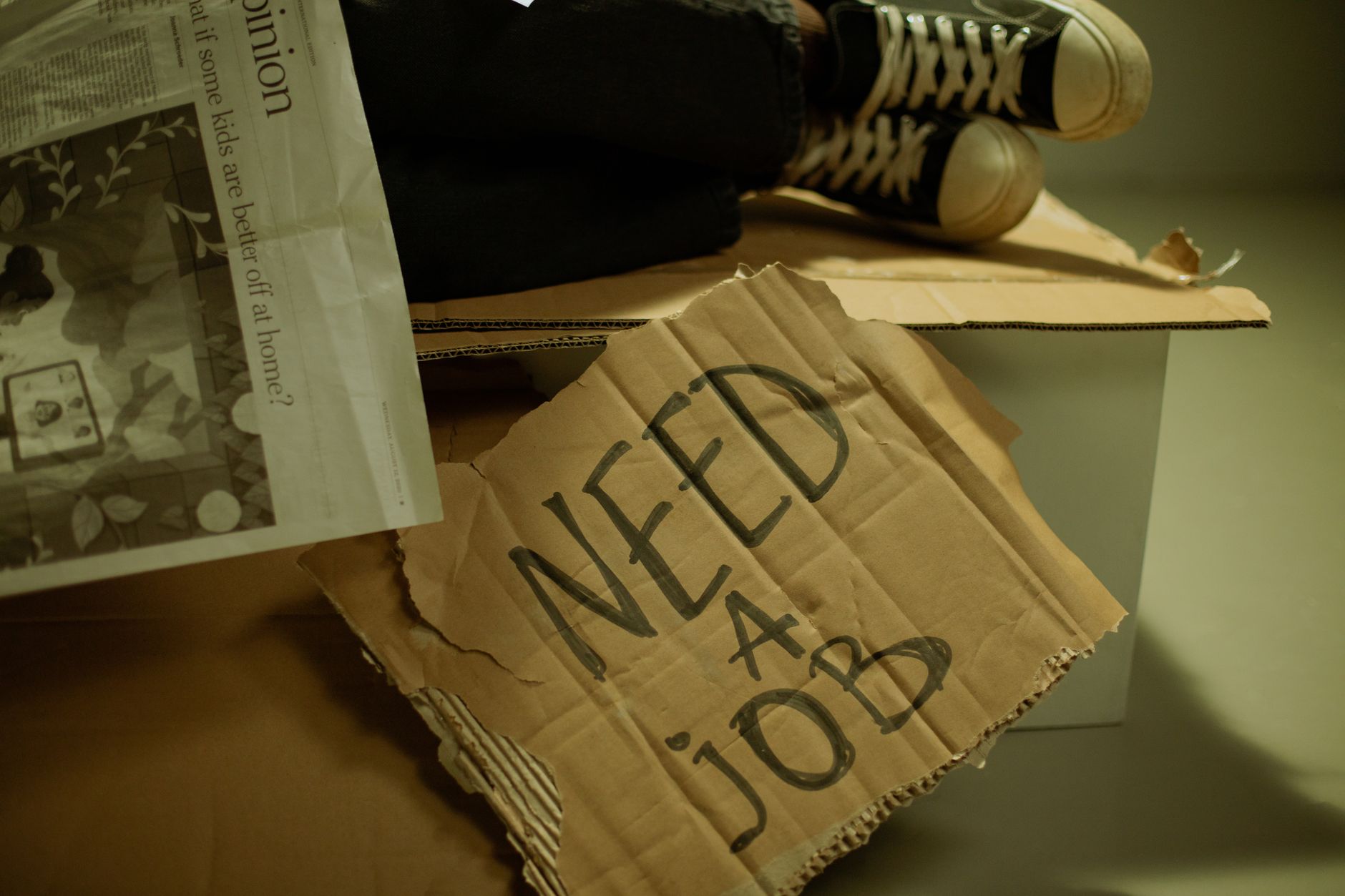
The Federal Reserve, which spent much of this period weighing the competing pressures of inflation risk and labor market fragility, now has additional evidence that the employment side of its dual mandate was under more stress than real-time data showed. Whether that changes any assessment of monetary policy decisions made during that window is a question that economists will debate – but it adds one more data point to a period already defined by uncertainty about where the economy was actually heading.
Reading the Revision in a Broader Context
Annual benchmark revisions have in recent years developed a pattern worth noting: they have tended to revise job creation downward rather than upward. That consistent direction suggests the monthly survey methodology may be structurally inclined to overcount payrolls in the near term, particularly during periods when business formation and destruction are both running at elevated rates – a condition that makes the underlying employer population harder to sample accurately. The spring 2025 to spring 2026 revision fits that pattern.
For anyone tracking corporate labor costs, the revision carries a subtler implication. If employers were hiring less than reported, the aggregate wage bill across the economy was also somewhat smaller than the raw numbers suggested. That could point to slightly lower-than-measured labor cost pressure on corporate margins during the period – though the effect would be modest given that the revision is described as slight rather than substantial.
What remains unchanged is the fundamental character of the labor market during that year: unusually slow, persistently below the hiring rates that defined earlier post-pandemic years, and offering fewer on-ramps for job seekers than a healthy economy typically provides. The question now is whether the period from spring 2025 to spring 2026 represents the bottom of the cycle – or a plateau that persisted longer than anyone yet realizes.