


Bombers Leave RAF Fairford Following Security Review
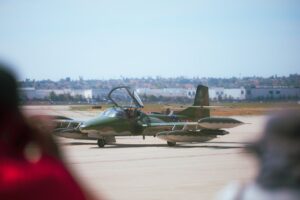
The U.S. Air Force has withdrawn all of its bombers from RAF Fairford, a U.S.-operated military air base in England, after an investigation into a planned terror attack targeting the installation. The removal marks a significant operational shift for a base that has served as a staging point for American strikes against Iran.
RAF Fairford, located in Gloucestershire, is one of the few bases outside the United States capable of housing American heavy bombers, including B-2 stealth aircraft. Its proximity to multiple theaters of operation has made it a consistent fixture in U.S. strategic military planning – and, apparently, a target for those opposed to American military action in the Middle East.
What the Withdrawal Means for U.S. Military Posture in Europe
The decision to pull bombers from RAF Fairford does not happen in a vacuum. The base has been used as a forward operating location for American bomber missions in recent years, including operations connected to strikes on Iran. Removing that asset from British soil, even temporarily, carries real operational and logistical weight – repositioning heavy bombers is costly and requires extensive coordination between U.S. and allied commands.
The financial implications of such a redeployment extend well beyond fuel and flight hours. Maintaining a bomber presence at RAF Fairford requires sustained investment in ground crews, maintenance personnel, munitions storage, and intelligence infrastructure. When that presence is pulled back, those costs don’t disappear – they shift, typically back to domestic bases in the continental United States or to other overseas installations capable of absorbing the mission load.
Forward basing arrangements like the one at RAF Fairford exist precisely because proximity to potential conflict zones reduces response time and operational costs over the long run. Pulling back from that posture – even if driven by a legitimate security threat – means accepting a degraded reaction window and higher per-mission costs if the bombers are needed in the region again. The math of military logistics rarely favors retreat, even when retreat is the prudent call.
The terror plot investigation itself adds another layer of cost that rarely gets discussed in public. Counterterrorism inquiries at military installations generate substantial expenditure – additional security personnel, surveillance upgrades, forensic analysis, interagency coordination between U.S. and British intelligence services. None of that is cheap, and none of it was budgeted for at the start of the fiscal year.
The Economic Relationship Embedded in U.S. Basing Rights
American military bases on British soil are not simply strategic arrangements – they are economic relationships. The U.S. operates under longstanding agreements with the United Kingdom that govern how American forces use British facilities, and those agreements carry financial obligations on both sides. RAF Fairford, technically a Royal Air Force base, is made available to the United States under these terms, meaning any significant operational disruption touches the economics of the bilateral defense relationship as well.
Local economies around RAF Fairford have historically benefited from the American military presence there – spending at nearby businesses, employment for civilian contractors, and infrastructure investment that flows from sustained occupation of the base. A full withdrawal of bombers, even one framed as temporary, sends a signal to those communities and to the contractors and suppliers who depend on steady U.S. military activity at the site.
Security Costs and the Price of Operating in a Threat Environment
What the RAF Fairford situation illustrates, more than anything, is that operating military assets in overseas locations carries a security premium that is not always visible in defense budgets until something forces it into view. A planned terror attack against an active U.S. bomber base in a close allied nation is the kind of event that triggers mandatory security reviews, facility audits, and protocol overhauls across multiple installations – not just the one directly targeted.
The U.S. Air Force has not specified a timeline for returning bombers to RAF Fairford. That ambiguity itself carries economic consequence. Defense contractors, logistics firms, and base support personnel operating under contracts tied to bomber presence at the facility are now operating without a clear horizon. Short-term contracts may lapse. Personnel may be reassigned. Supply chains calibrated around a sustained American bomber presence at a specific location don’t pause gracefully – they fracture.

The strikes on Iran that RAF Fairford helped facilitate were themselves the product of enormous military expenditure, and the decision to base the aircraft responsible for those strikes on British soil was a deliberate strategic and economic calculation. The terror plot that triggered this withdrawal suggests that calculation now has to be revisited – with the added cost of whatever security failures allowed the threat to develop in the first place sitting somewhere in the ledger, unaccounted for.