



A Competition That Extends Far Beyond Silicon Valley
At Axios House D.C., policymakers and business leaders converged around a single, uncomfortable question: whether the United States has what it takes to outpace its rivals in the technologies that will define the next generation of economic power. The conversation was not abstract. It centered on three specific arenas – artificial intelligence, energy, and advanced manufacturing – where the gap between winning and losing carries consequences that extend well beyond quarterly earnings reports.
The urgency in the room reflected something that has been building in policy circles for years: the recognition that America’s economic trajectory over the next decade will not be shaped by consumer spending patterns or housing markets, but by whether domestic industry can hold its ground against competitors who are moving fast and spending aggressively to catch up.
Why These Three Industries Are Inseparable
AI, energy, and advanced manufacturing are not separate problems with separate solutions. They function as a single, interlocking system, and that interdependence is exactly what makes the challenge so demanding. Training and running large-scale AI systems requires enormous amounts of electricity. Building the semiconductor fabs, battery plants, and robotics facilities that constitute advanced manufacturing requires both AI-driven design tools and reliable, affordable power. Fall short in one area, and the others suffer proportionally.
American policymakers have been wrestling with this for years, cycling through a range of legislative and regulatory responses. The CHIPS and Science Act, passed in 2022, represented one of the more direct attempts to accelerate domestic semiconductor production. But the discussion at Axios House D.C. signaled that participants see the current moment as distinct – a period where the pace of AI development is accelerating fast enough to compress what would normally be decade-long industrial transitions into far shorter windows.
Business leaders at the event pushed back on the idea that market forces alone will produce the coordination required. Large-scale industrial buildouts – new power grid infrastructure, reshored manufacturing capacity, AI research clusters – require long planning horizons and capital commitments that private actors hesitate to make without policy signals that reduce uncertainty. The argument being made, explicitly and repeatedly, was that government has a role not just in funding these transitions but in providing the regulatory stability that makes private investment rational in the first place.
The Energy Constraint That Keeps Coming Up
Of the three pillars discussed at Axios House D.C., energy may be the one generating the most acute near-term pressure. Data centers running AI workloads are drawing power at a scale that is straining grid capacity in several U.S. regions. The buildout of new electricity generation – whether from natural gas, nuclear, solar, or a combination – is not keeping pace with the demand that AI infrastructure is creating, and that mismatch has real consequences for where companies choose to invest and locate operations.
The energy conversation also carries geopolitical weight. Global disruptions to fuel supply chains have repeatedly demonstrated how energy dependencies can become strategic vulnerabilities, and several voices at the event framed America’s energy buildout not purely as an economic issue but as a question of whether the country can sustain the infrastructure that advanced technology requires without being exposed to external shocks.
Manufacturing as the Physical Layer of the AI Economy
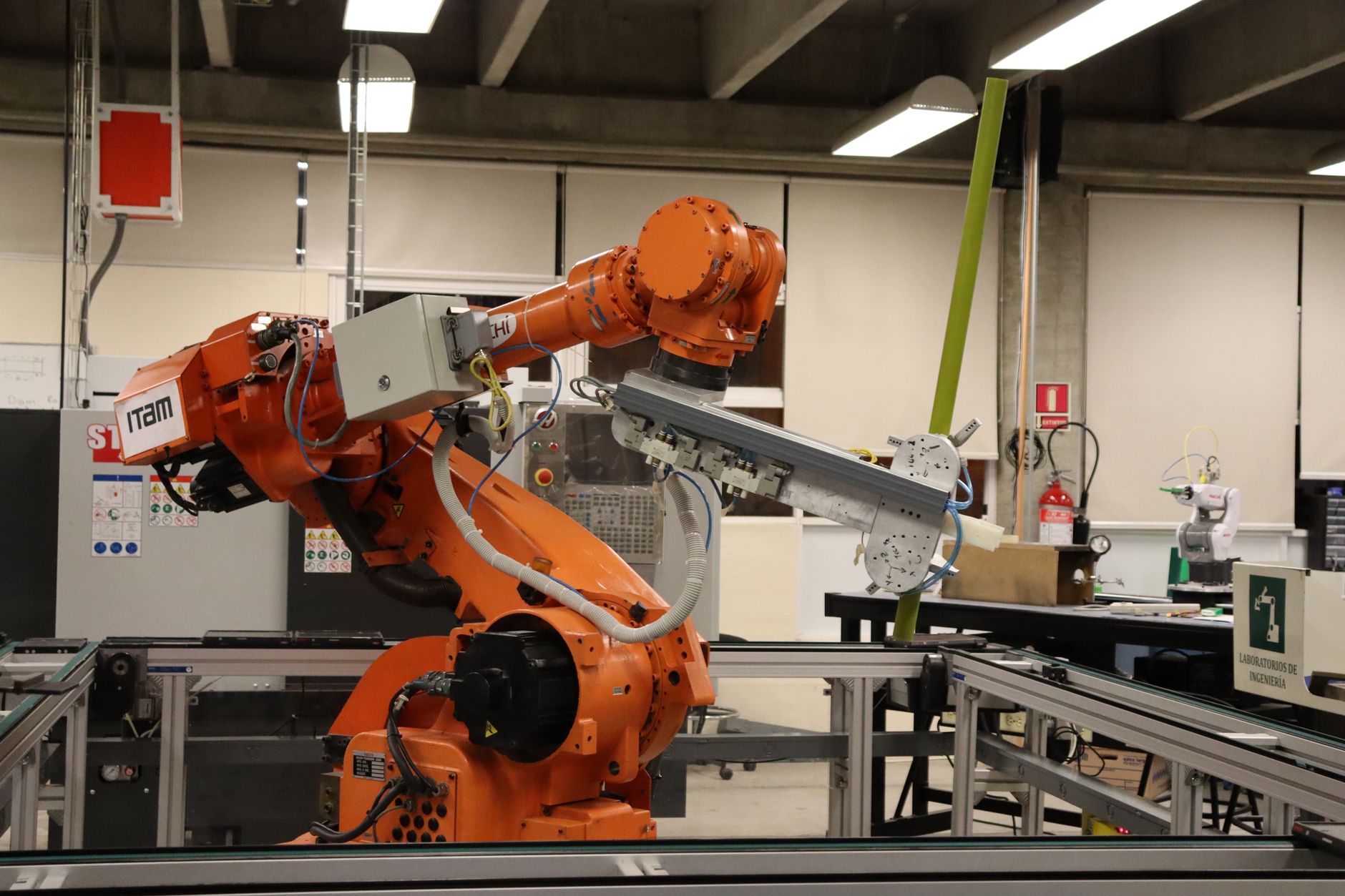
Advanced manufacturing drew sustained attention at Axios House D.C. because it represents something that pure software companies cannot replicate: physical production capacity that cannot be easily moved or replicated overnight by a competitor. The ability to fabricate chips, assemble precision components, and produce the hardware that AI systems run on has been treated for decades as a cost problem to be solved through offshoring. That calculus is now being reconsidered at the highest levels of American industrial policy.
Reshoring advanced manufacturing is not a simple undertaking. It requires a trained workforce with skills that, in many cases, domestic labor markets currently lack. It requires supply chains that were deliberately dismantled over decades in the name of efficiency. And it requires the kind of patient capital that does not always align with the expectations of investors focused on near-term returns. The leaders at Axios House D.C. were not pretending otherwise.
What distinguished the conversation was the degree of agreement that the status quo – continued dependence on foreign production for critical technology inputs – carries risks that are no longer acceptable to absorb quietly. That consensus, even if it does not translate immediately into policy action, marks a shift from debates that spent years stuck on whether domestic manufacturing was even worth pursuing at scale.
The practical question is what specific mechanisms can close the gap between stated ambition and actual industrial output. Incentives, tariffs, federal procurement rules, research funding, workforce training programs – all of these tools were in the air at Axios House D.C., but the particulars of how they get assembled into a coherent strategy remain unresolved. American manufacturers competing in AI-adjacent industries are operating now, under current conditions, watching foreign rivals receive state support at a scale that has no equivalent in U.S. policy today.
The Competition Framework That Is Driving the Conversation
Framing economic policy around competition with foreign rivals – particularly China – is not new in Washington. What is shifting is the specificity of where that competition is being located. A few years ago, the debate was largely about trade deficits and supply chain vulnerabilities exposed by the pandemic. The conversation at Axios House D.C. had moved to something more granular: which country builds the AI systems that become embedded in critical industries, who controls the power generation that runs them, and who manufactures the hardware components that cannot be easily substituted.
That granularity matters because it changes the policy levers that become relevant. Winning a trade argument is different from building out a domestic semiconductor ecosystem. The former can happen through negotiation; the latter takes years of sustained capital deployment, regulatory coordination, and workforce development – all of which require political durability that Washington has historically struggled to maintain across administration changes.
Policymakers at the event were candid about that structural problem. Building an industrial policy that survives election cycles is not a technical challenge – it is a political one, and the American system was not designed with long-horizon industrial strategy as a core feature. The bipartisan elements of the current AI and manufacturing push offer some durability, but the specific funding levels, incentive structures, and regulatory frameworks remain subject to the same political pressures that have derailed previous attempts at sustained industrial strategy.
One business leader’s point lingered past the formal discussion: foreign competitors do not wait for American political consensus before they invest. They are building capacity now, with state backing, on timelines that do not pause for midterm elections or budget negotiations.